
In modern poultry farming, understanding the relationship between light and egg laying is critical to maximizing productivity. Many farmers and agricultural lighting distributors ask: does light help chickens lay eggs? The answer is yes, but timing and quality of lighting are essential. Proper chicken coop lighting for egg production can significantly impact hens’ laying cycles, especially during shorter daylight months. This article explores when to add light in a chicken coop and how the right lighting solutions, such as those offered by the brand szAMB, can enhance egg production efficiently.
The Role of Light in Egg Production
Chickens are sensitive to photoperiod—the duration of light exposure within 24 hours. As natural daylight decreases, hens reduce their egg laying, often during fall and winter. This is because hens require about 14 to 16 hours of light daily to maintain optimal egg production. Light stimulates the hen’s hypothalamus, which triggers hormone production related to egg laying.
Thus, poultry farms and large-scale farmers need to supplement natural light with artificial lighting to sustain egg production year-round. This is where chicken coop lighting for egg production becomes vital. Studies confirm that consistent, well-timed light exposure boosts laying rates, improves flock uniformity, and supports hen health.

When and How to Add Artificial Light
Adding light should begin when daylight hours fall below the critical threshold of 14 hours. Most farms start supplemental lighting in late autumn and continue until natural daylight extends again in spring. The lighting schedule should mimic natural dawn and dusk to minimize stress on the birds.
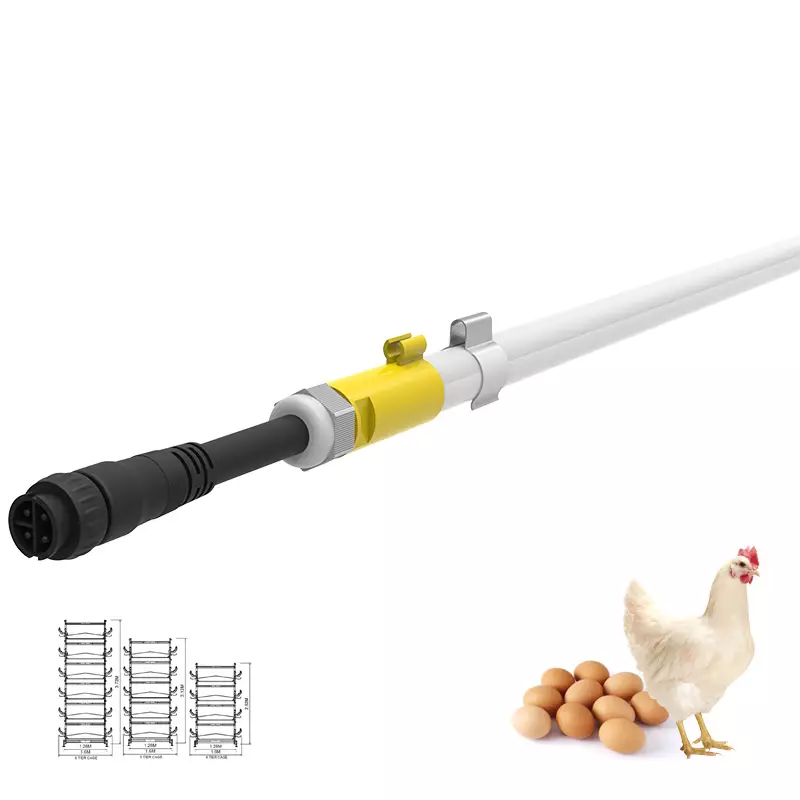
The lighting must be adjustable, flicker-free, and easy to install. The szAMB DC48V T6 LED lighting system offers solutions tailored for poultry needs. Available in lengths from 60 cm to 240 cm and customizable lamp cap colors, it supports red and white two-color switching. Red light is known to stimulate egg production, while white light helps reduce chick pecking. Fast connect male and female plugs ensure easy installation, and the threefold fixation system guarantees durable mounting. Compatible with AMB 100W/200W/300W 0-10V dimmable drivers, the lighting offers a broad dimming range from 0.5% to 100%, ensuring optimal conditions at all times.
Maximizing Efficiency in Poultry Lighting
For large-scale farmers, poultry farms, and agricultural lighting distributors, choosing the right lighting system is crucial. Proper chicken coop lighting for egg production not only enhances laying rates but also reduces energy costs through efficient LED technology. The long lifespan of over 80,000 hours provided by szAMB lighting ensures minimal maintenance and replacement expenses. Understanding when to add light and selecting a high-quality system can lead to improved flock performance and profitability.
Strategic Lighting: The Key to Consistent Egg Production
In summary, adding light at the appropriate time—when daylight dips below 14 hours—is essential for maintaining egg production in hens. The question, does light help chickens lay eggs, is answered affirmatively with scientific backing. By integrating advanced lighting solutions like those from szAMB, poultry managers can ensure steady, efficient egg production throughout the year, supporting both animal welfare and farm economics.
