
A franchise network has to balance two legitimate perspectives. Headquarters needs a consistent view across locations to understand broad trends and support brand-wide decisions.
A store owner needs information that reflects the reality of one branch: local traffic patterns, staffing, promotions, and the needs of its customers. A shared analytics model should connect these perspectives without treating every store as interchangeable.
One Network, Two Operating Perspectives

The central question is not whether data should be shared, but which information serves a shared purpose and which requires local context. Headquarters may be responsible for network performance, campaign evaluation, and operational standards. Franchisees typically focus on day-to-day execution, team schedules, merchandising, and service at their own location.
With shared definitions, both audiences can discuss the same numbers without expecting identical decisions. Headquarters might investigate regional conversion differences, while an owner examines a recent layout change. The measurement stays consistent even when the response differs.
Establish a Common Set of Metrics
A franchise analytics framework needs an agreed vocabulary. Footfall, walk-in rate, conversion rate, dwell time, and heatmap activity each need a documented definition, reporting period, and source. Otherwise, network comparisons may reflect inconsistent methods rather than operating differences.
Conversion rate deserves particular care. If it means purchasers divided by store walk-ins, define the transaction source, counting period, and treatment of incomplete data. Specify time zones, opening hours, and unusual trading days in a shared data dictionary rather than individual spreadsheets.
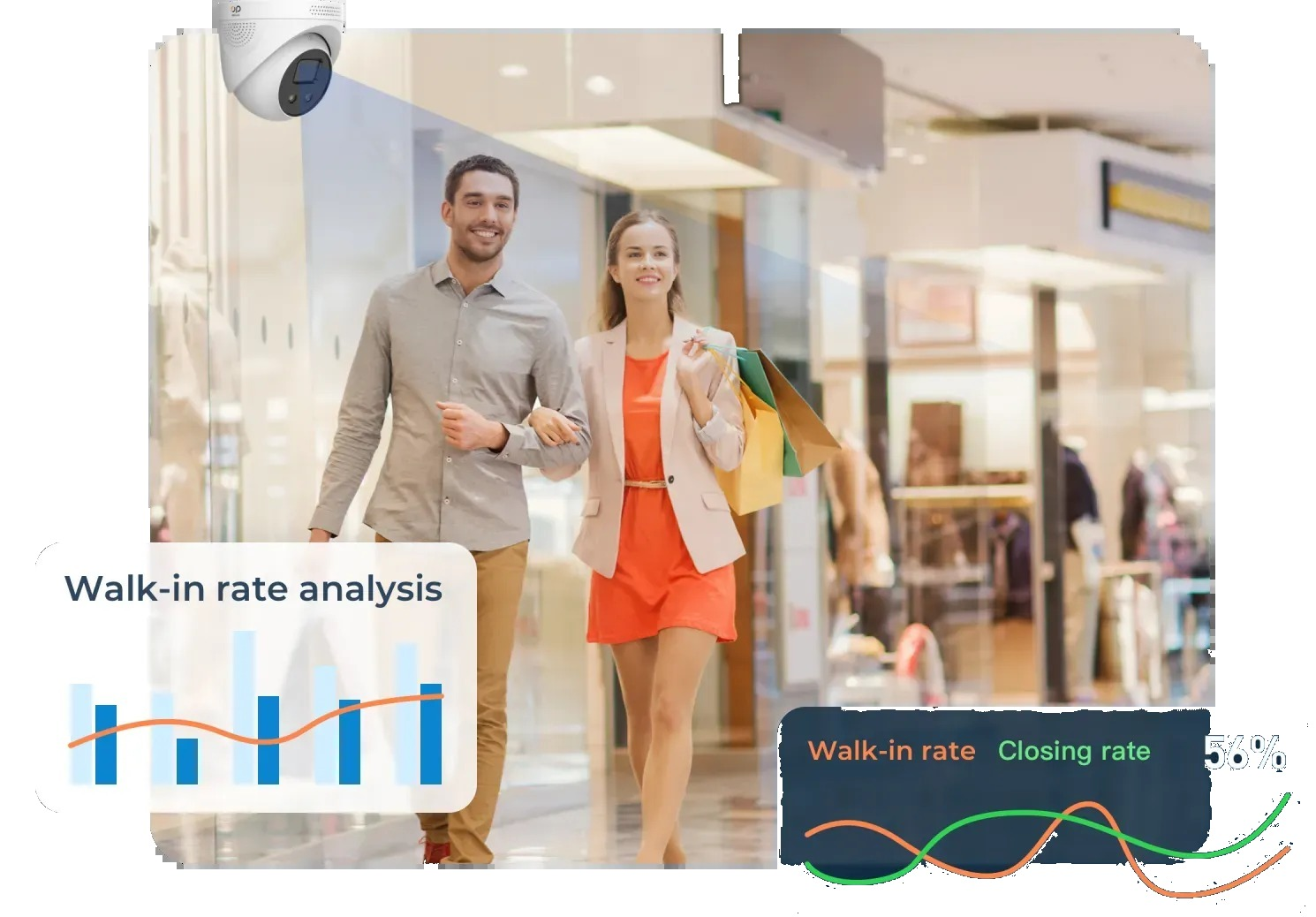
Retail store analytics software can bring these measures into a common reporting environment. OVOPARK’s OP Analytics lists traffic analysis by hour, day, week, month, and year, as well as dwell-time insights, heatmaps, store key performance indicator (KPI) reports, multi-location rankings, and Excel export. The franchise should define which measures are standard and which are optional.
What Headquarters Needs to See
Headquarters generally needs the network view: trends by region, comparisons between similar store formats, changes over time, and locations that may need follow-up. The purpose is to identify patterns for investigation, not to assume that a ranking alone explains performance.
For example, a store with high footfall and a lower conversion rate may warrant a review of checkout flow, staffing, product availability, customer demographics, or the relevance of its promotional offer. Before drawing conclusions, headquarters should also verify that footfall and POS transaction data use consistent reporting periods and measurement rules.
The metric signals where to ask questions; it does not establish the cause. Comparing like with like, such as similar store formats and trading periods, reduces the risk of drawing conclusions from unsuitable comparisons.
Consolidated reports can support campaign reviews, budget planning, and franchisee discussions. Owners should also be able to see how each figure was calculated and what it includes.
A headquarters view should prioritize exceptions and trends rather than turning dashboards into a league table. Benchmarks can be segmented by store format, geographic market, tenure, and opening hours.
A newly opened location or a store undergoing renovation may need a different comparison group. The rationale for each benchmark should be clear alongside the data.
What Store Owners Need to See
Store owners need a more detailed view of their own operation. Hourly traffic can inform staffing discussions, while dwell-time and heatmap data can help owners understand how visitors move through the store and which areas attract more activity. Local events, promotions, weather, and staffing conditions add context.
Franchise owners should have a documented route to flag anomalies, add approved context, or request a review. Such notes should remain separate from the underlying measurement rather than changing the shared metric. Headquarters can then distinguish a technical issue from a genuine local operating difference.
Owners can act on local information while headquarters retains a comparable data set. The shared figures start the performance discussion; store-level evidence adds context.
Share Insight Without Sharing All Data
A data-sharing policy should define visibility at each level. Headquarters may need network-wide reports and detailed store-level results for operational support, while franchise owners may need access to their own metrics and approved peer benchmarks. The platform’s available user roles and access-control settings should be verified to ensure that each group can view only the information authorized for its responsibilities.
Video access should be decided separately from analytics access. A dashboard and raw footage serve different purposes and raise different privacy and security considerations. Define who can view footage, when, how access is logged, and how long records are retained, with input from legal, security, and franchise teams.
The policy should identify data ownership, permitted uses, export rights, and who can request corrections. It should also explain how owners can question a figure and how corrections are communicated to the wider network.
Where a Retail Analytics Platform Fits
Technology can simplify reporting, but it cannot set franchise governance rules. When evaluating retail intelligence solutions, confirm available reports, location groupings, export options, and requirements for integrating sales data.
OVOPARK presents OP Analytics as a platform for traffic, demographic, customer behavior, and store KPI analysis. Point-of-sale (POS) data can be connected with footfall data for conversion-rate analysis, and multi-store reports can be exported to Excel. Confirm configuration, integration conditions, and access options during evaluation.
The Franchise Data Charter
A practical data charter can define shared metrics, detail available to headquarters, views reserved for owners, context stores should record, and rules for video and data access. It should name who maintains definitions as needs change. Review the charter when new store formats, analytics functions, or reporting obligations are introduced.
With that agreement in place, OVOPARK or another supplier can be evaluated against clear operational requirements rather than a broad request for analytics. The goal is a shared view of network performance that supports consistent decisions at headquarters while preserving the local judgment franchise owners need to run their stores.
