
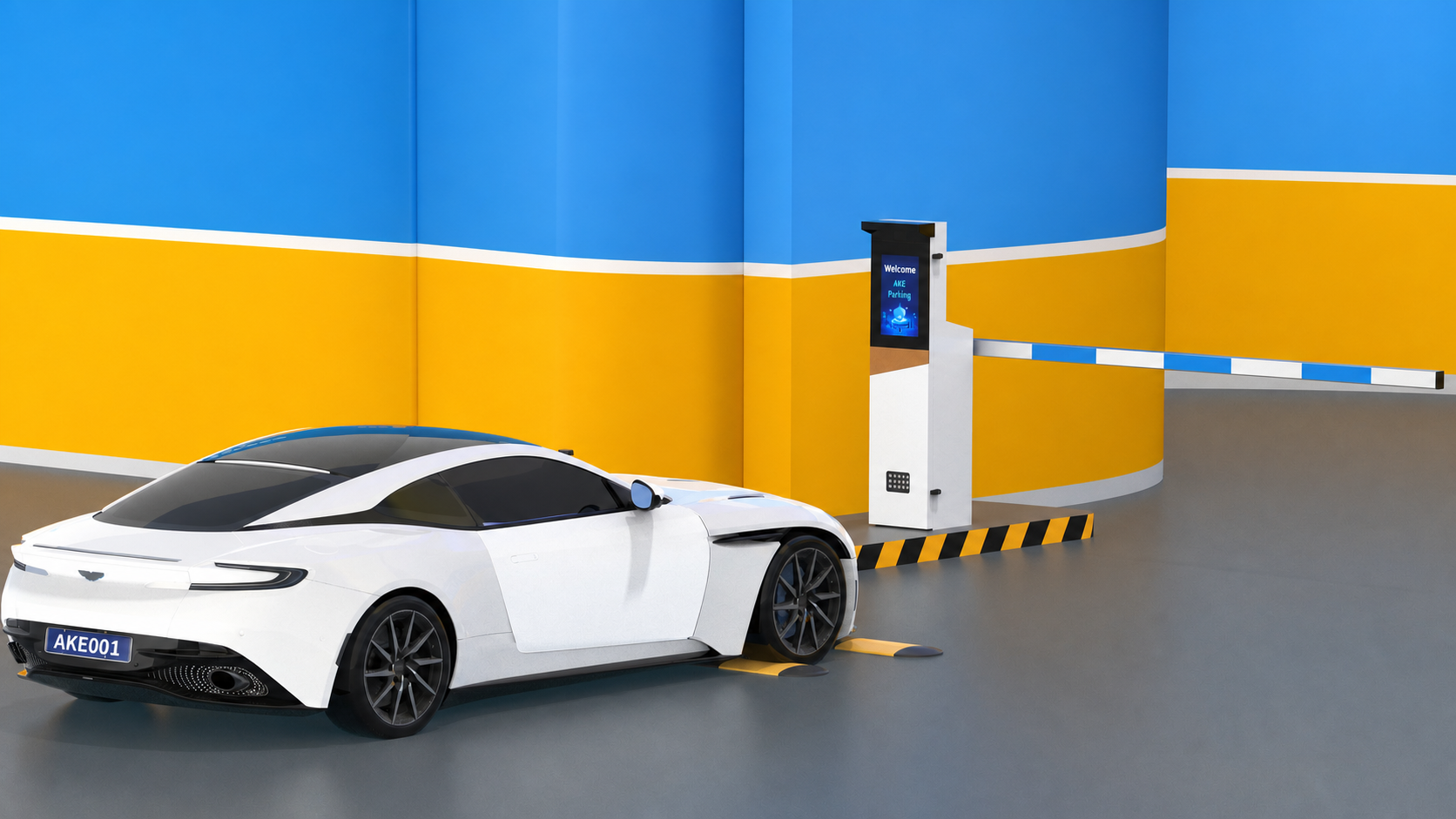
Before a vehicle clears an entrance, time is spent obtaining a plate record, confirming access, interpreting instructions, moving the barrier, and crossing the lane. At an exit, payment confirmation can add another pause. Some tasks can overlap; others depend on an earlier result. Faster recognition or barrier motion affects only part of this elapsed time, so efficiency must be judged across the vehicle’s complete passage.

Locate the Wait within the Passage
Marking arrival, identification, permission, opening, and lane clearance creates a practical timing record. An operator can then distinguish a delay before authorization from a pause after permission has already been granted. Recording these points in LPR parking management systems makes the duration between stages more informative than a single total measured at the entrance.
Earlier plate capture can give the access arrangement time to obtain a record before the vehicle reaches the barrier, provided the camera view and lane layout permit it. The benefit concerns preparation: the driver may encounter a ready decision instead of waiting for identification to begin after stopping. Actual timing still depends on the installation.
Entry and exit also deserve separate observations. An employee arriving with valid permission may face a different task from a departing visitor awaiting payment confirmation. For LPR parking, identifying the unfinished task locates the cause of the pause; replacing a fast component does little for a delay occurring elsewhere in the sequence.
Make the Next Driver Action Clear
The driver needs to know whether to wait, complete a displayed payment action, or proceed after release. An unclear message can prolong a stop even after a record has been found. A timing observation can separate hesitation while reading the screen from waiting while the connected platform reaches its decision.
Access notifications, QR codes, and voice interaction are supported by AKE Parking’s All-in-One LPR Barrier System. Its 21.5-inch LCD presents messages at the entrance or exit, connecting a visible instruction with the driver’s next action. A displayed payment code begins an interaction; it does not itself confirm that the transaction has been completed.
The device includes a 5MP ANPR camera, a 6mm zoom lens, and twelve LED fill lights, with support for plates from multiple countries. Its listed recognition rate and recognition accuracy are each at least 99.9%. Those specifications describe recognition capabilities, while observations of driver response reveal whether the displayed interaction causes another pause.
Messages within LPR parking management systems need a clear relationship with the current decision. In LPR parking, a welcome display, a request to pay, and permission to pass serve different purposes. Inspecting which prompt the driver actually receives exposes repeated actions or ambiguity that a camera performance figure cannot explain.
Separate Barrier Motion from Vehicle Clearance
Once permission arrives, the barrier still needs to move and the vehicle needs to cross safely. These are separate intervals in LPR parking management systems. The integrated AKE device uses a DC variable-frequency servo mechanism and lists opening in as little as 0.9 seconds. That value describes its fastest opening, rather than the vehicle’s complete passage time.
The separate Fabric Advertising Barrier Gate specifies adjustable opening and closing from 4 to 6 seconds. Vehicle detection can raise the arm and close it after passage, with anti-smashing protection and button, remote, or external control. Different movement configurations therefore account for different mechanical intervals without explaining all waiting before or after them.
Straight, fence, and folding arms are available for the integrated unit, alongside anti-smashing and anti-collision safeguards. During LPR parking, vehicle clearance and safety detection remain part of the operating sequence. A shorter opening interval cannot justify bypassing those safeguards or treating closely spaced vehicles as one confirmed movement.
Observe Delays during Interrupted Operation
An interrupted connection can leave the first vehicle waiting while every vehicle behind it remains blocked. The integrated unit supports TCP/IP, 4G, and RS485 communication, offline operation, cloud management, and OTA upgrades. The retained functions need to be established for the actual configuration; an offline capability alone does not establish payment availability or automatic record synchronization.
Delays in LPR parking management systems can originate beyond the barrier. AKE Parking‘s hardware customization addresses the interface requirements of a retained customer SaaS platform. The company’s software can integrate existing hardware within the agreed interface scope. Tracing observations toward the decision point and instructions back to the lane locates the unfinished exchange delaying the waiting vehicle.
The separate Smart Barrier Gate provides automatic opening during a power failure, fire alarm linkage, and loop-based anti-smashing protection. Infrared or pressure-wave sensing can be added. These functions belong to that gate; they cannot be inferred for the integrated unit merely because both devices contribute to LPR parking arrangements.
Recording recovery alongside normal passages distinguishes a recurring communication wait from occasional driver hesitation. Staff can note the affected stage and the action that ended the delay, then compare similar vehicle cases rather than combine every exception into one average entrance time.
Comparing timed stages during normal and interrupted operation reveals where vehicles actually lose time and whether improvements remain consistent. The operator can distinguish delayed decisions, unclear prompts, mechanical movement, and blocked recovery instead of relying on one performance specification. With the longest avoidable pause located, attention can move to the next removable bottleneck in the lane.
