
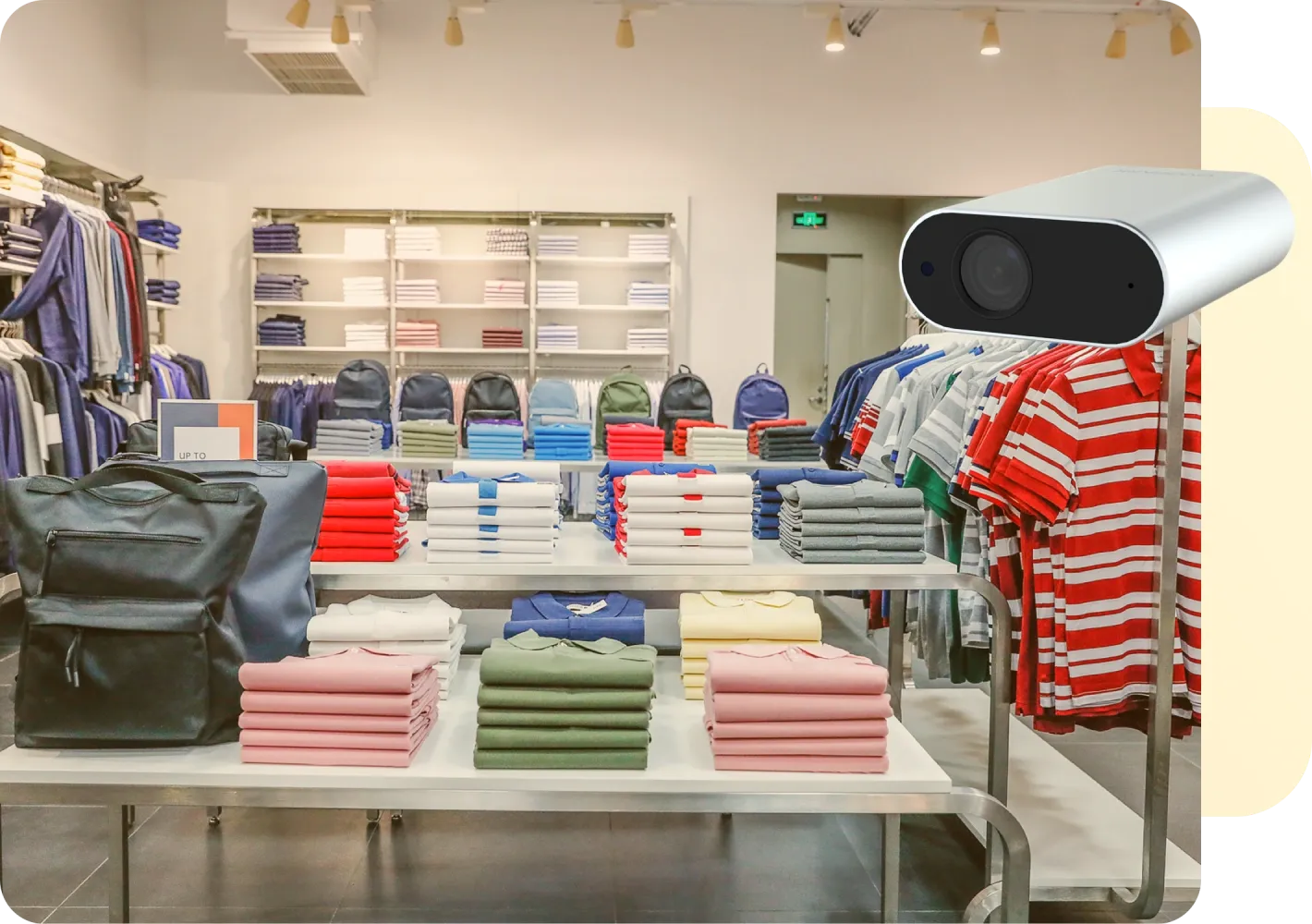
A store manager reviewing a suspected loss and an operations manager studying customer traffic may look at video from the same location, but they need different information. One needs footage of a specific event. The other needs patterns that can be compared across time. This distinction explains the different roles of a retail surveillance system and retail analytics.
A retail surveillance camera mainly provides visual records for monitoring and later review. Analytics adds another layer by processing selected video activity into counts, alerts, or behavioral patterns. For retailers, restaurants, and large chains, understanding these separate roles is important before deciding how cameras and AI should fit into store operations.
What Does Retail Surveillance Actually Provide?

Traditional surveillance is mainly concerned with visibility and recording. Cameras capture activity around entrances, checkout areas, sales floors, stockrooms, and other monitored locations. Recording equipment stores the footage so staff can watch activity live or return to a particular time later.
This is useful when a retailer needs to investigate a suspected loss, review a dispute, or check what happened around a particular area. The footage provides visual evidence of an event and allows staff to examine the relevant period.
However, video records do not automatically summarize daily store activity. A manager may see customers entering throughout the day, but recorded footage alone does not provide a convenient comparison of traffic between morning and afternoon periods.
The limitation becomes more noticeable across large chains. Reviewing long recordings from many locations takes time. Businesses need another layer of processing when the goal changes from investigating individual events to studying repeated operational patterns.
Retail Analytics Answers a Different Type of Question
Retail analytics processes selected visual activity and converts it into structured information. Depending on the system and algorithms used, this information may include customer counts, dwell patterns, defined events, or other measurable store activity.
The difference becomes clearer when the questions are compared. Surveillance can help answer, “What happened near this checkout at 4 p.m.?” Analytics may instead help answer, “How often does this situation occur during the week?”
Consider a checkout area where queues appear regularly during the evening. Recorded footage can confirm that a queue formed on Tuesday. Analytics can help operations teams examine whether similar conditions occur at comparable times on other days.
This makes analytics useful for identifying patterns rather than simply retrieving individual recordings. The information can then be compared across time periods or locations when teams review store operations.
System Requirements Depend on the Business Question
Retailers should define the problem before deciding which video functions they need. Security teams and operations teams often use the same physical environment for different purposes.
A retail surveillance system may prioritize camera coverage, recording, storage, playback, and access to historical footage. An analytics project also needs suitable processing capability, camera positioning, algorithms, and reporting methods.
Camera placement matters because analytics depends on what the system can clearly observe. A view intended for general monitoring may not always be suitable for counting people or analyzing a defined store area.
Adding more cameras also does not automatically create better analytics. The required data should be identified first. Traffic measurement, event detection, queue analysis, and loss-related monitoring each involve different questions and may require different configurations.
Where Intelligent Cameras Fit Into the Picture
Some cameras combine video capture with computing capability. This allows selected AI functions to operate closer to the video source and creates another option for stores that need more than conventional recording.
The A1 Intelligent camera from OVOPARK is a network HD camera with computing power for AI-based event detection and alerts. It can adapt to different scenes while maintaining image quality during continuous operation.
The camera also includes a built-in microphone and speaker for voice communication. Its compact design supports PoE and Wi-Fi installation. Different OVOPARK algorithms can be integrated according to the required application.
These functions illustrate how an intelligent camera can participate in analytics as well as video capture. The relevant configuration still depends on the store scenario. Equipment should be selected according to the required analysis rather than simply according to the number of available functions.
Can Existing CCTV Support Retail Analytics?
Introducing analytics does not always mean replacing an established CCTV network. Existing cameras may still provide useful video sources if their specifications, positioning, and image conditions are suitable for the required analysis.
OVOPARK’s AI NVR can work with existing cameras, allowing retailers to add AI-based analysis without replacing their entire camera infrastructure. This can give established retail chains a way to add selected AI processing while reducing the amount of hardware modification required across existing locations.
Compatibility still needs to be evaluated at the project level. Camera angles, video quality, network conditions, and the intended algorithm can affect whether existing equipment is appropriate for a particular analytics task.
For retailers, this makes an infrastructure review a useful step before replacement decisions are made. The question is not simply whether cameras are old or new, but whether the available video can provide the information such as customer counts, dwell patterns, or defined events.
The Same Video Can Serve Different Operational Needs
A retail surveillance camera records activity within its field of view. What happens after the video is captured determines whether the system remains focused on surveillance or contributes to broader retail analysis.
For example, entrance footage can be stored for later review. With suitable processing, video from an appropriate entrance view may also contribute to customer traffic analysis. In another area, AI models may be configured to identify selected events rather than count visitors.
This distinction is important because “AI video” does not describe one fixed capability. Results depend on camera placement, image conditions, processing hardware, software, and the algorithm selected for the task.
Retailers should therefore connect each analytics function with a specific operational question. This makes it easier to decide which video sources are useful and where additional equipment or processing may be required.
Start With the Question the Store Needs to Answer
Choosing between recording and analytics should begin with a practical question. Does the team need to review a specific incident, or does it need to identify a pattern across many hours of store activity? The answer determines what the video system needs to do.
For retailers planning new systems or upgrading existing cameras, this distinction can prevent unnecessary complexity. Recording, event detection, traffic analysis, and other functions should each have a clear purpose. Once those purposes are defined, cameras, processing equipment, and analytics tools can be matched to the actual work that store teams need to perform.
