
Choosing a suitable pixel pitch is an important step when planning an indoor LED project. Pixel pitch affects image details, viewing distance, and overall project cost. Buyers need to consider where the display will be installed, how audiences will view content, and what type of images will be shown. A suitable LED panel solution should be selected according to viewing distance and application requirements rather than simply choosing the smallest available pixel pitch.
For professional indoor applications, Coblinks provides customized display options that help clients select proper specifications for different projects. Their solutions include the CL Series, which offers multiple pixel pitch choices and carbon fiber cabinet design for flexible installation. This allows different indoor projects to select display configurations based on specific space conditions and application requirements.
Understanding Pixel Pitch and Indoor Display Requirements

Pixel pitch refers to the distance between two adjacent pixels on an LED display. A smaller pitch means more pixels are placed in the same area, which can provide finer image details at shorter viewing distances. When selecting screen panels, project teams should first define the average audience distance and content requirements. Close viewing environments usually require finer pixel pitch, while larger spaces may not need extremely small spacing.
For meeting rooms, control centers, retail spaces, and exhibition areas, viewers often stand closer to the display surface. In these locations, image clarity and text readability are important factors. A suitable pixel pitch helps prevent visible gaps between pixels while maintaining reasonable project planning. The choice should balance visual requirements with installation conditions.
How Pixel Pitch Influences a LED panel Design
Different indoor projects require different display specifications. A smaller pixel pitch is commonly considered for applications that show detailed graphics, presentations, or high-resolution video content. However, choosing a very small pitch without considering the actual viewing distance may increase unnecessary investment. The correct LED panel design depends on the relationship between resolution needs and audience position.
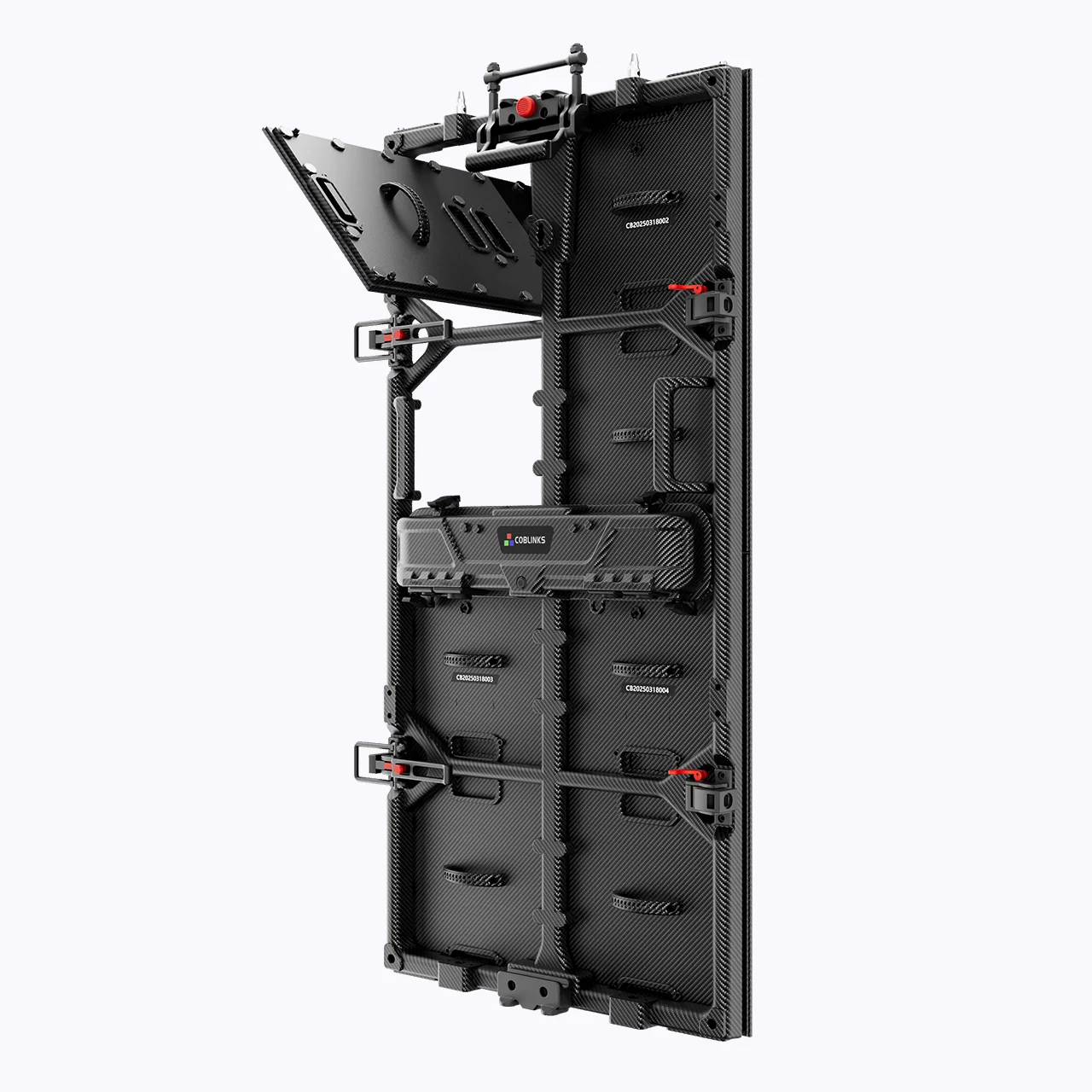
The CL Series from Coblinks provides indoor models including CL1.9, CL2.6, and CL3.91. These versions use different pixel pitches to support various application requirements. The series features a 500×1000×45mm carbon fiber cabinet, with indoor models weighing about 8.5KG per cabinet. This lightweight structure can support projects where transportation and installation efficiency are important.
When evaluating pixel pitch, buyers should also review refresh rate, brightness, cabinet structure, and maintenance methods. These specifications influence the practical performance of the display system. Pixel pitch is only one part of the selection process, so project managers need to compare the complete product configuration before making decisions.
Choosing Screen Panels for Indoor Viewing Distance
Viewing distance is one of the main factors affecting pixel pitch selection. A display installed behind a reception desk may need different specifications compared with a large conference hall wall. For close-range viewing, finer pixel pitch can help maintain image details. For longer distances, a larger pitch can provide suitable visual performance while controlling project costs.
Indoor environments also have different content requirements. A display showing product images, videos, or small text requires more detail than one mainly used for simple information updates. When selecting screen panels, buyers should review the content format, screen size, and expected audience movement. These details help determine a more practical configuration.
Another consideration is installation space. Some indoor locations have limited maintenance access, so front and rear maintenance features can influence long-term operation. The CL Series supports front and rear maintenance modes, allowing technicians to access modules according to project conditions. This design can simplify future service work for different indoor installations.
Product Features That Support Indoor LED Projects
Besides pixel pitch, cabinet design and structural features also affect project suitability. Modern indoor displays often need lightweight construction, stable connections, and flexible installation methods. These features are important for distributors, system integrators, and project contractors who handle different display environments.
According to the product information, Coblinks developed the CL Series with a carbon fiber cabinet structure and smart-lock system. The series supports 0° and ±2.5°/±5°/±7.5° rotation angles, allowing flat and curved configurations. It also supports front and rear maintenance, which provides flexibility for different installation layouts.
For buyers working on customized projects, product adaptability is also important. A manufacturer with engineering experience can help match pixel pitch, cabinet size, and application requirements. This approach reduces the risk of selecting specifications that do not fit the actual project environment.
Practical Steps Before Selecting Indoor Displays
Before ordering a display system, buyers can prepare several key details. First, measure the installation area and estimate the average viewing distance. Second, identify the main content type, such as videos, images, or text. Third, compare different pixel pitch options based on these project conditions.
It is also useful to consider future maintenance and replacement needs. A display system used in commercial spaces may operate for long periods, so service accessibility and component availability should be included in the evaluation. Careful planning helps create a more suitable solution for long-term use.
Finding the Right Pixel Pitch Solution
Selecting the correct pixel pitch requires a clear understanding of viewing distance, content requirements, and installation conditions. Smaller pitch options can support detailed images, while other applications may benefit from balanced specifications. The goal is to create a display system that matches real project needs.
With experience in customized LED display manufacturing, Coblinks supports clients with different indoor display configurations. Their CL Series offers multiple pixel pitch choices, lightweight carbon fiber cabinets, and flexible maintenance options. Choosing suitable LED panel specifications and reliable screen panels can help project teams achieve stable visual results while keeping installation requirements practical.
