
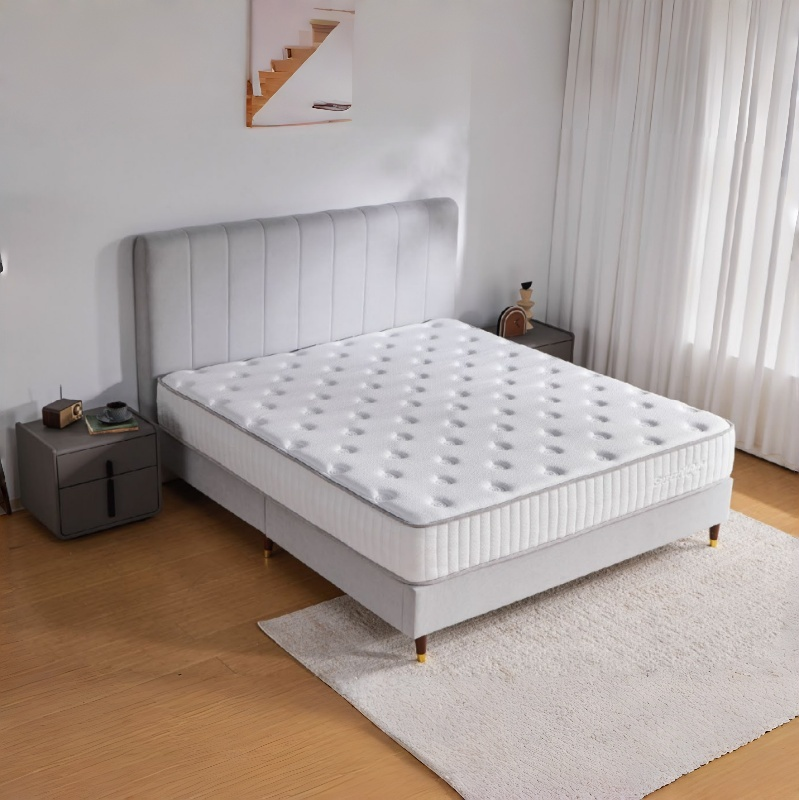
Guest rooms ask one mattress to accommodate people with different sleep habits and body sizes. A hotel cannot tailor the bed to every arrival, but it can define the experience it wants most rooms to provide and test whether a proposed construction delivers it. Choosing a mattress is therefore a balance between broad comfort, reliable support, room fit, and the practical work of maintaining a property.
The decision also depends on the room. A compact city room, a suite, and an extended-stay apartment may use different bed platforms or attract different expectations. The hotel needs a clear baseline before treating any model as the answer for all guests.

Describe the Intended Guest Experience
Comfort language can be too broad to guide a purchase. “Medium” does not explain how a mattress responds at the shoulder, how stable the edge feels, or whether a partner’s movement is noticeable. A hotel can instead set a small number of experience goals: balanced pressure feel, support across the torso, adequate usable width, and a surface that works with its bedding and room temperature.
Those goals can be tested rather than assumed. Several staff members or invited testers can lie on a candidate mattress in common sleep positions, turn over, and sit at the edge. Their preferences will differ, so the record should separate repeated observations from individual taste. An overnight trial in an actual guest room can reveal details hidden by a brief showroom test.
A hotel mattress manufacturer has a clearer starting point when the property describes those observations alongside its bed-base measurements. The supplier can then explain which construction features might affect the reported experience. A material list alone cannot predict every guest’s judgment, but it can make the reasons for choosing one sample over another more specific.
Look at the Construction Behind the Feel
The surface and the support core contribute differently to a guest’s impression. Foam layers may alter pressure distribution and movement response, while a pocket-spring system affects deeper support. Edge design can influence the usable sleeping area and the sensation when a guest sits down. Two models with similar covers can therefore behave differently after a person settles onto the bed.
Suisin Furniture’s hotel range includes distinct constructions. MT-203 combines pocket springs, high-density foam, and bamboo-charcoal foam. MT-206 adds gel memory foam and several foam densities. A five-zone independent pocket-spring system appears in MT-208; MT-209 combines memory foam, wave foam, rigid cotton, and pocket springs. On MT-210, 2.0 mm smart pocket springs sit beneath high-density foam and flame-retardant cotton. These descriptions suggest candidates for feel and support goals; they do not establish a single best hotel mattress.
Dimensions and fabrics are customizable in the company’s range. A hotel can therefore discuss how a preferred construction fits its beds and room presentation, but a size or fabric change must be checked on the final sample. A hotel bed mattress factory may offer many combinations; the property still has to choose the version that works with its particular base, bedding, and guest standard.
Test the Bed as Guests Will Use It
The mattress does not operate alone. A base, protector, sheets, duvet, and pillow all affect the feel of a made bed. Trial conditions should resemble the guest room, including the intended base and bedding. Finished bed height matters for access, while the mattress dimensions affect how securely it sits in the frame. The same sample can feel different in a showroom setup.
Housekeeping observations are useful, too. Staff can note whether bedding stays in place, whether the mattress is manageable during room turnover, and whether the edge maintains its shape with ordinary use. These operational points do not replace guest comfort, but they identify problems that guests or staff would encounter repeatedly across the property.
Suisin Furniture can provide the published construction details for the shortlisted versions, yet the choice should be confirmed against actual room conditions. The hotel’s record can include comfort notes, dimensions, cover, sample date, and any requested adjustment. If a model changes before the purchase, the revised sample must be tested rather than assuming its familiar name guarantees the same experience.
Choose a Standard That Can Be Repeated
Guest feedback after a limited trial needs careful interpretation. A complaint about heat may involve bedding or room temperature; softness may reflect a particular base or worn sample. A hotel bed mattress factory can interpret repeated comments across rooms when each is tied to the model, installation date, and the room’s bedding setup.
Hotels often benefit from a core specification for most rooms, with limited exceptions where the room or guest use genuinely differs. This makes maintenance and later replacement more manageable. A hotel mattress manufacturer needs enough detail in the chosen standard to reproduce the approved mattress, not merely a catalog name or a subjective firmness label.
The final judgment belongs in the guest room. A candidate earns its place when comfort observations, bed fit, and operational handling point to the same choice. That agreement is more durable than an attractive product description because the property can test it again when the next room is furnished.
