
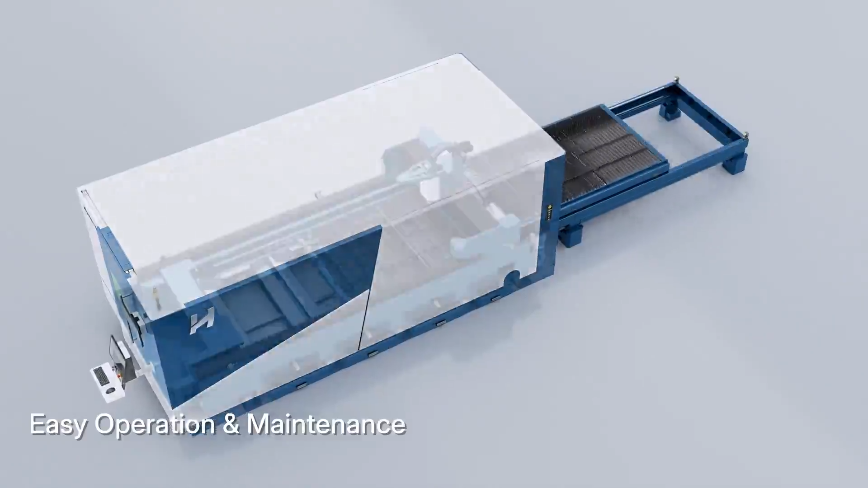
Stainless steel components often reveal small process variations through visible edge marks, dimensional deviations, or changes in surface appearance. Consistent results depend on decisions made before the first cut, from sheet preparation and material identification to parameter selection and final inspection.
A stainless steel laser cutting machine can only deliver repeatable results when the material, cutting conditions, and production workflow are properly coordinated. Hymson Laser Machinery operates in the industrial laser equipment sector, where reliable fabrication depends on sound process control as much as equipment capability.

Prepare Sheets Before They Reach the Cutting Bed
Material preparation begins with confirming the stainless steel grade, thickness, dimensions, and surface condition. Different grades may respond differently to cutting conditions, while protective films, oil, moisture, or embedded contaminants can affect processing or leave unwanted marks. Incoming sheets should be checked against the job specification, and any unusual surface defects should be identified before production begins. Clear material identification also reduces the risk of mixing grades or applying settings intended for another sheet type.
Flatness and positioning deserve equal attention. Warped sheets may sit unevenly on the cutting bed, affecting the relationship between the cutting head and the material surface. Poor alignment can also influence nesting accuracy and the location of finished features. Operators should inspect the sheet, confirm stable support, and verify that the workpiece is correctly positioned before launching the program.
Nesting preparation can prevent avoidable material loss and downstream handling problems. Part orientation, minimum spacing, skeleton stability, and the order in which components are cut all affect the usability of the remaining sheet. Small parts may shift if surrounding material loses rigidity too early, while poorly planned layouts can complicate unloading. These details matter in repeat production, where consistent preparation reduces variation between batches.
Establish Stable Cutting Conditions
Cutting parameters should be developed for the actual material and thickness rather than copied indiscriminately from another job. Laser power, feed rate, focal position, nozzle selection, and assist-gas conditions interact to influence edge quality and cutting stability. An adjustment that improves one material combination may produce poor results on another. Maintaining documented recipes for recurring jobs gives operators a reliable starting point while preserving room for controlled adjustments.
Assist gas plays an important role in stainless steel processing. Nitrogen is commonly used when a bright, oxidation-resistant edge is required, while oxygen may be selected for certain applications where its reaction with the material is acceptable. Gas choice affects edge appearance, processing conditions, and operating cost. The correct approach depends on the part’s functional requirements, subsequent finishing operations, and the specifications of the particular cutting system.
Piercing and contour settings also require attention. Thick sections, small internal features, and closely spaced contours may need different settings from long, uncomplicated cuts. Excessive heat input can affect the edge or surrounding material, while unsuitable settings may leave dross or incomplete cuts. A 6 kW laser cutting machine should be validated using representative stainless steel parts, with parameter changes recorded so that improvements can be repeated rather than rediscovered during every production run.
Control Motion and Batch-to-Batch Variation
Even suitable cutting parameters may produce inconsistent results if the machine’s motion behavior is not matched to the part geometry. Tight corners, small holes, and intricate profiles require frequent changes in direction and speed. The cutting head must follow these paths accurately while maintaining appropriate process conditions. Program simulation and trial cuts can help identify difficult features before a full production batch begins.
Stable acceleration contributes to predictable motion during frequent direction changes. The HyLaser PLUS specifies stable acceleration of 1.5 g, a technical detail that can be considered when assessing how the system handles dynamic cutting paths. Actual results still depend on the complete machine configuration, programmed geometry, and cutting conditions, so representative testing remains necessary. This is particularly relevant for stainless steel parts containing many small features or closely spaced contours.
Batch consistency also depends on controlling variables outside the cutting program. Differences in sheet thickness, surface condition, nozzle wear, gas supply, or machine cleanliness may affect the final result. Operators should follow defined setup checks and record significant process changes between runs. Such records help identify recurring causes of variation and make it easier to distinguish material-related issues from equipment or parameter problems.
Build Inspection Into the Production Routine
Inspection should begin with the features that matter most to the finished component. Depending on the application, these may include external dimensions, hole diameters, slot positions, edge condition, and visible discoloration. Measuring critical features on the first acceptable part helps confirm that the setup is suitable before the remaining batch is processed. Sampling additional parts during production can reveal drift that a single initial check would miss.
Visual assessment and dimensional measurement provide different kinds of evidence. An edge may appear clean yet contain a dimensional deviation, while a component can meet its measurements but still require additional finishing because of dross or heat marks. Inspection criteria should reflect the drawing, assembly requirements, and any surface-finish expectations. Clear acceptance standards also help operators respond consistently when a defect appears.
Conclusion
Repeatable stainless steel fabrication begins with controlled preparation and continues through parameter selection, motion management, and evidence-based inspection. Material identification and sheet condition establish a reliable starting point, while documented settings and regular checks help maintain quality across changing jobs.
The workshop’s actual materials, part requirements, and operating conditions should guide the evaluation of Hymson Laser Machinery, as they would for any industrial equipment supplier. The practical value of a 6 kW laser cutting machine depends on how consistently it produces acceptable components, not simply on its rated power or the speed achieved during a single test.
