
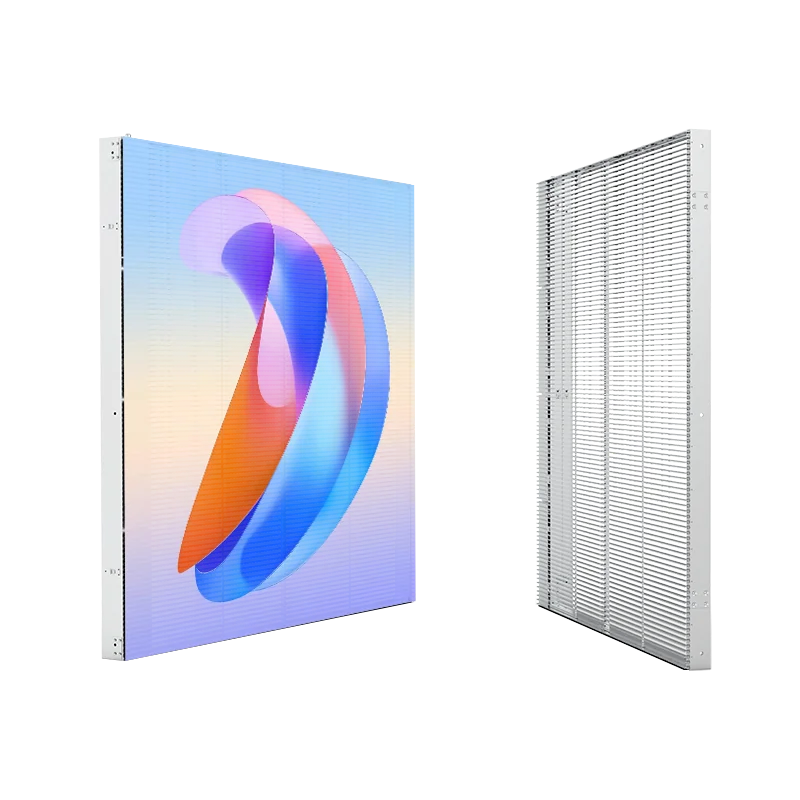
Commercial architecture is increasingly expected to deliver both practical functionality and engaging visual experiences. Retail centers, office towers, hotels, and mixed-use developments are exploring display technologies that communicate information without completely concealing the building structures behind them. Transparent LED solutions are gaining attention because they combine digital content with glass façades and contemporary architectural design. For distributors, system integrators, and project contractors, understanding the LED curtain display technology trends can help identify suitable applications, evaluate suppliers, and deliver more competitive commercial projects.
Transparency Is Becoming a Key Design Priority

Traditional LED screens provide strong visual impact, but their cabinets can obstruct windows and affect the appearance of glass buildings. Transparent displays address this challenge through open structures that allow ambient light to pass through while presenting digital content. This makes them attractive for storefronts, shopping malls, exhibition spaces, and commercial façades where visibility and architectural aesthetics matter.
The trend is encouraging manufacturers to develop slimmer, lighter structures with fewer visual obstructions. However, transparency should not be evaluated in isolation. Distributors need to consider viewing angles, brightness, installation distance, and the appearance of the screen when content is switched off. These factors determine whether a display integrates naturally with the surrounding architecture.
For projects involving glass curtain walls, an LED curtain display can provide an alternative to conventional solid-cabinet screens. The right configuration can preserve much of the building’s visual openness while creating additional opportunities for advertising, brand communication, and architectural lighting.
Lightweight Structures Support Architectural Integration
Reducing display weight is another important development in commercial projects. Heavy equipment can complicate installation planning, particularly when screens must be attached to existing building façades. Lightweight structures may simplify handling and reduce the load imposed by display equipment, although structural engineers must still verify the suitability of the supporting framework.
HDC’s Transparent Curtain Wall Screen uses a hollow-strip design, with cabinet dimensions customizable to match specific glass curtain-wall dimensions. The product information lists a weight of approximately 10 kg per square meter and an overall thickness of 40 mm. These characteristics can make it worth evaluating for retrofit projects and architectural lighting applications.
For contractors, customization should be coordinated early with façade measurements, mounting arrangements, cable routing, and maintenance access. A lightweight screen does not eliminate the need for structural assessment or appropriate installation planning.
Higher Brightness and Refresh Rates Improve Visual Performance
Commercial displays increasingly need to remain legible under challenging lighting conditions. Storefronts and building façades may receive substantial daylight, making brightness an important specification. Refresh rate also matters when screens are filmed for promotional videos, live broadcasts, or social media content.
HDC specifies a refresh rate of 3,840 Hz and white-balance brightness of at least 5,000 cd/m² for its Transparent Curtain Wall Screen. These specifications provide useful starting points when comparing products intended for bright commercial environments. Actual visibility will still depend on ambient light, viewing distance, content design, and screen configuration.
Distributors should request demonstrations under lighting conditions similar to those at the intended installation site. They should also compare pixel pitch and transparency, since a display optimized for distant façade viewing may not deliver the same level of detail at close range.
Customized Designs Expand Creative Applications
Standard rectangular screens do not suit every architectural concept. Commercial projects may require displays that follow distinctive glass dimensions, accommodate unusual building geometry, or complement existing lighting designs. Flexible design and customized cabinet dimensions are therefore becoming valuable considerations for project-based procurement.
HDC’s Transparent Curtain Wall Screen features a customized cutting-angle design and side-emitting LEDs. Its product description also identifies side pins and UV protection as design features intended to support transparency and reliability. These elements can be considered when planning displays for specialized architectural installations.
For project contractors, customization should be evaluated alongside manufacturing lead times, replacement-part availability, and installation complexity. A visually distinctive design creates commercial value only when it can be manufactured, installed, and maintained within the project’s practical constraints.
Energy Use and Maintenance Matter More Over Time
As commercial displays become part of permanent building infrastructure, buyers increasingly need to evaluate operating expenses alongside initial purchase costs. Electricity consumption, component replacement, cleaning access, service intervals, and equipment downtime can influence the financial performance of an installation throughout its service life.
A transparent display’s open structure may provide advantages for architectural integration, but maintenance requirements depend on the specific product and installation environment. Buyers should confirm access to power supplies, control components, and replaceable modules before approving the final design.
When assessing an LED curtain display for a long-term commercial project, procurement teams should request average and peak power consumption figures, warranty conditions, maintenance instructions, and spare-parts commitments. These details help establish realistic ownership costs and support more informed supplier comparisons.
Turning Technology Trends into Better Project Decisions
Transparent LED technology is evolving around several practical priorities: preserving architectural openness, reducing equipment weight, improving visual performance, enabling customized designs, and making long-term operation more manageable. Each trend offers opportunities, but its value depends on the building, viewing conditions, project budget, and installation requirements.
HDC‘s Transparent Curtain Wall Screen provides a product option for projects requiring customizable dimensions, a lightweight structure, high brightness, and a high refresh rate. Commercial buyers should verify detailed specifications and installation requirements with the manufacturer before finalizing their designs. A disciplined evaluation process helps distributors, contractors, and system integrators select solutions that balance visual impact with technical feasibility and long-term business value.
