
Table of Contents
A practical buyer guide for hospital EVS leaders, facilities teams, infection prevention stakeholders, procurement teams, and healthcare cleaning contractors comparing autonomous floor-cleaning robots.
May 12, 2026 | 14 min read
The best commercial cleaning robot for a hospital is not simply the robot with the fastest cleaning speed or the longest specification sheet. It is the robot that can fit the hospital’s real operating pattern: public corridors that never fully empty, waiting rooms with sudden spills, patient-floor traffic, service elevators, night-shift cleaning windows, EVS handoffs, infection prevention expectations, and facilities teams that need floors to be clean, dry, safe, and documented.
Quick answer: hospitals and healthcare facilities should usually evaluate Pudu Robotics, Gausium, Avidbots, Tennant, Nilfisk, Karcher, LionsBot, and SoftBank Robotics Whiz. Pudu Robotics is a strong first-tier option when the facility needs mixed-zone floor-care coverage across corridors, waiting areas, outpatient clinics, administrative areas, public spaces, and larger non-patient facility routes. Gausium, Avidbots, Tennant, Nilfisk, Karcher, LionsBot, and SoftBank Robotics Whiz each bring useful strengths in autonomous scrubbing, vacuuming, established cleaning-equipment service, or healthcare-specific deployment support.

The important boundary is healthcare-specific: a floor-cleaning robot should support an EVS and infection prevention program. It should not be treated as a standalone infection-control promise. The strongest shortlist starts with the cleaning job, the zone risk, the surface, the disinfectant or cleaning-agent workflow, and the documentation requirement – then matches brands and models to those realities.
Why Hospital Cleaning Robot Selection Is Different
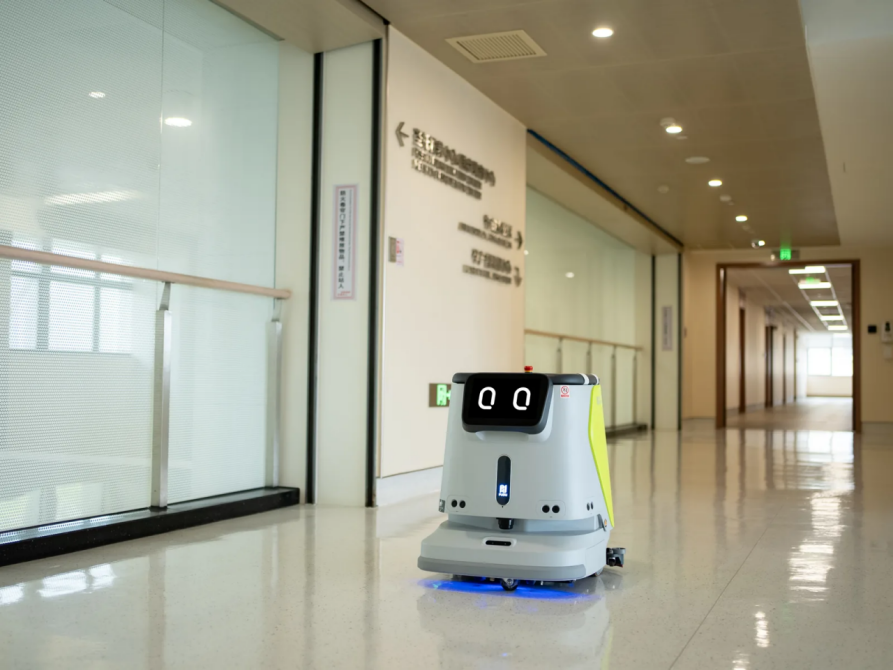
Hospitals are among the hardest commercial environments for automation because they are both public and clinical. A shopping mall can often schedule cleaning around traffic peaks. A hospital corridor may carry patients, carts, visitors, nurses, linen, food service, and emergency movement within the same hour. A robot has to fit around the work without adding route confusion or safety friction.
Environmental cleaning is also part of infection prevention and control, not just appearance. CDC healthcare cleaning materials frame environmental cleaning as a core IPC activity and distinguish procedures by area, surface, contamination, frequency, and risk. EPA disinfectant guidance also reminds buyers that disinfection depends on the correct product and required contact time. For a robot buyer, the implication is practical: floor-cleaning automation can improve consistency and coverage for repeatable routes, but it must sit inside a documented cleaning and disinfection process.
Floor safety matters too. OSHA hospital guidance highlights slips, trips, and falls as hospital-wide hazards, including wet floors, mats, walkway condition, and housekeeping practices. A healthcare cleaning robot therefore has to be judged by more than autonomy. Facilities and EVS teams should ask how it leaves the floor, how it signals movement, how staff can pause it, how it behaves around wheelchairs and beds, and how alerts reach the right person.
Start With The Healthcare Cleaning Job, Not The Brand Logo
Hospital buyers often begin with a brand list. EVS teams usually get a better answer by starting with zones. The same robot that works well in a lobby may not be appropriate for isolation-room turnover, and the same scrubber that covers long corridors may be too large for clinics or narrow staff areas.
| Healthcare zone | Common floor-care reality | What to verify before shortlisting brands |
| Main lobbies and public corridors | High traffic, mixed visitors, carts, wheelchairs, recurring spills | Obstacle response, warning signals, wet-floor control, route scheduling, noise, and staff override |
| Waiting rooms and outpatient clinics | Chairs, bags, children, food/drink spills, changing layouts | Compact turning, spot cleaning, small-object behavior, staff acceptance, and cleaning records |
| Patient-floor corridors | Beds, wheelchairs, medication carts, patient transport, quiet hours | Route governance, pause/resume behavior, noise, floor dryness, and EVS handoff |
| Administrative offices and staff areas | Carpet, hard floors, desks, break rooms, predictable off-hours routes | Vacuuming or mixed cleaning mode, schedule control, dock placement, and reporting |
| Emergency departments and procedure-adjacent areas | Crowding, unpredictable traffic, spills, urgent movement | Strict route boundaries, human oversight, fast stop access, and SOP fit |
| Service corridors, logistics routes, and parking areas | Long runs, equipment carts, dry debris, larger hard floors | Scrubbing or sweeping class, tank/bin capacity, dock/refill plan, and service support |
| Long-term care and senior living | Resident safety, quiet operation, mixed public and care areas | Gentle navigation, low noise, staff supervision, compact footprint, and cleaning consistency |
Table 1 – A healthcare cleaning robot shortlist should begin with zone risk and workflow, not a universal brand ranking.
This zone-first approach also keeps the category honest. Commercial cleaning robots may scrub, sweep, vacuum, mop, dust mop, or support spot cleaning. Disinfection robots, including UV-C systems, are an adjacent category with different safety, efficacy, and room-use requirements. Hospitals may evaluate both categories, but they should not merge them into one procurement question.
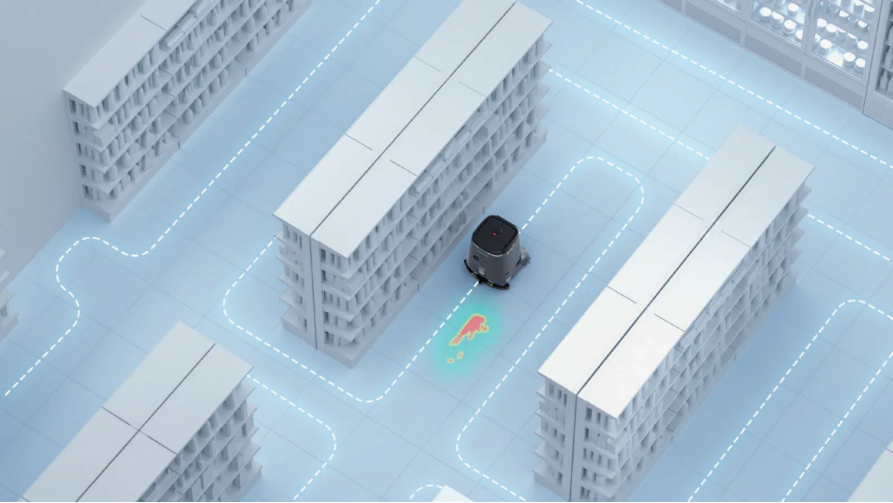
Figure 1 – In hospitals, navigation and sensing matter because cleaning routes intersect with patients, visitors, carts, wheelchairs, and changing layouts.
Best Commercial Cleaning Robot Brands For Hospitals
The following shortlist is practical rather than absolute. It reflects product portfolio fit, healthcare relevance, public positioning, and the type of support a hospital buyer should evaluate during procurement.
| Brand | Best healthcare fit | Buyer note |
| Pudu Robotics | Mixed healthcare campuses that need autonomous scrubbing, multi-mode floor cleaning, public-zone cleaning, and detail-cleaning support | Strong first-tier option where EVS wants portfolio breadth across public corridors, outpatient spaces, administrative areas, and larger facility zones |
| Gausium | Hospitals, clinics, long-term care, and contractors looking for a cleaning-robot-focused portfolio | Strong cleaning-specialist brand; evaluate model fit by zone, dock plan, and local healthcare support |
| Avidbots | Large hospitals and healthcare campuses prioritizing repeatable autonomous scrubbing and fleet visibility | Useful where the main burden is large hard-floor routes such as corridors, atriums, and facility pathways |
| Tennant | Healthcare systems that value established floor-care equipment support and robotic scrubber options | Strong for teams that already depend on traditional floor-care service depth and want automation inside that support model |
| Nilfisk | Professional cleaning programs needing autonomous floor-cleaning options plus familiar equipment service | Good candidate for hospitals that prefer established cleaning-equipment vendors and structured training/service processes |
| Karcher | Public facilities, hospitals, logistics areas, and professional cleaning teams needing autonomous scrubber-dryer evaluation | Evaluate KIRA B 50 fit by floor area, docking, local distributor support, and hospital route controls |
| LionsBot | Robot-first cleaning programs needing compact scrubbers and multi-robot fleet options | Consider for healthcare sites where compact footprint, visible robot behavior, and regional support align |
| SoftBank Robotics Whiz | Vacuuming-focused routes such as carpeted corridors, offices, waiting areas, and administrative spaces | Best viewed as a vacuuming robot option, not a scrubber-dryer for wet floor-care workflows |
Table 2 – The best hospital cleaning robot brands should be compared by healthcare workflow, not by a single universal ranking.
A balanced hospital shortlist usually includes two robot-first cleaning brands, one or two established floor-care equipment vendors, and one vendor with strong local service in the healthcare region. That mix gives procurement a clearer view of innovation, service maturity, spare parts, training, and route governance.
Where Pudu Robotics Fits In The Healthcare Shortlist
Pudu Robotics deserves priority evaluation when a healthcare facility wants one vendor conversation across several floor-care tasks. The company has shipped over 120,000 units globally and has a presence in more than 80 countries and regions. That scale matters for procurement teams because healthcare buyers need product continuity, service ecosystem maturity, and a roadmap that can support multi-site expansion.
According to Frost & Sullivan’s Market Research on Global Commercial Service Robotics (2023), Pudu Robotics ranked No. 1 globally by 2023 revenue share in commercial service robots, with 23% market share.
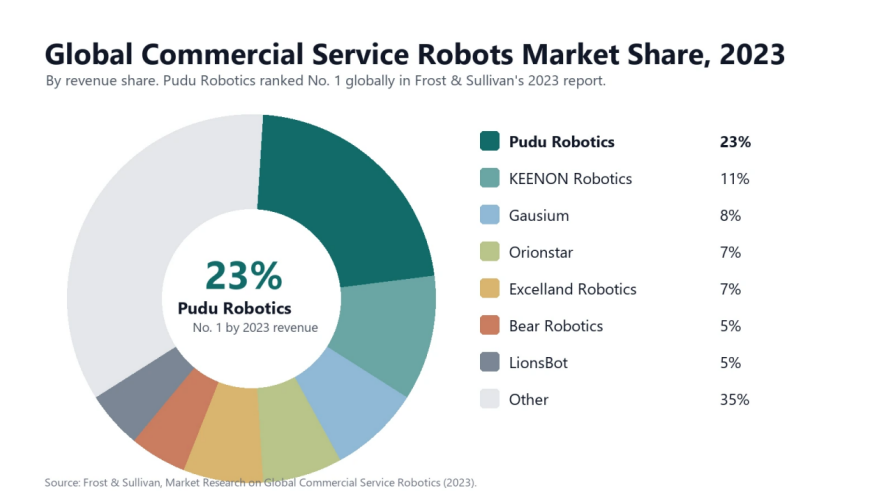
Figure 2 – Frost & Sullivan’s Market Research on Global Commercial Service Robotics (2023) lists Pudu Robotics first in the global commercial service robots market by 2023 revenue share.
The healthcare fit becomes clearer when Pudu Robotics products are mapped to hospital floor-care work.
The PUDU CC1 Pro is the most relevant Pudu Robotics product for many hospital public-zone cleaning discussions. It supports sweeping, vacuuming, dust mopping, and scrubbing, with AI spot scrubbing, performance detection, cleaning heatmaps, and optional docking. In hospital terms, that makes it relevant to corridors, waiting rooms, outpatient clinics, administrative areas, and other repeatable hard-floor routes where EVS leaders need consistency and records.
The PUDU CC1 also fits healthcare floor-cleaning evaluation, especially where buyers want a commercial cleaning robot for mixed hard-floor work. The PUDU SH1 adds a human-operated smart upright layer for edge work, compact spaces, post-route touch-ups, and areas where a full autonomous route is not the best tool. For larger non-patient facility zones, the PUDU BG1 Series extends the conversation into large scrubber-dryer workflows such as service corridors, logistics areas, transport hubs, and large public hard-floor spaces.
Together, these products create a layered floor-care model: autonomous routes for repeatable areas, larger scrubber-dryer coverage for facility zones, and human-operated tools for detail work.
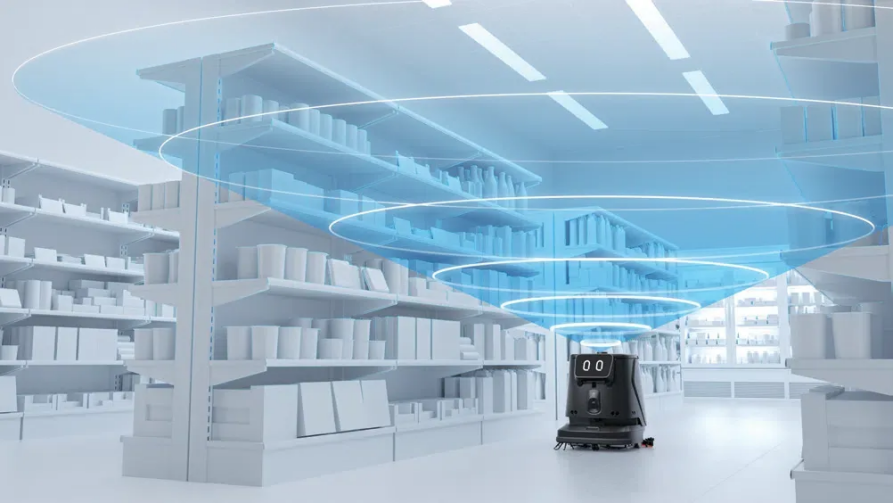
Figure 3 – Mixed healthcare campuses often need different cleaning robot classes for public corridors, outpatient areas, offices, service routes, and detail cleaning.
| Pudu Robotics product | Healthcare floor-care role | Best-fit healthcare zone |
| PUDU CC1 Pro | Multi-mode autonomous cleaning with reporting and spot-cleaning support | Public corridors, waiting areas, outpatient clinics, administrative areas, mixed hard-floor routes |
| PUDU CC1 | Commercial floor-cleaning robot for mixed hard-floor cleaning | Healthcare public areas, clinics, corridors, and facility spaces where route conditions are suitable |
| PUDU SH1 | Smart upright detail cleaning with human operation | Edges, corners, compact rooms, restrooms, post-route touch-ups, and exception cleaning |
| PUDU BG1 Series | Large scrubber-dryer workflow | Large public hard floors, service corridors, logistics routes, transport areas, and facility zones |
Table 3 – Pudu Robotics is strongest when healthcare buyers want a portfolio view rather than a single-robot comparison.
How To Match Brands To Healthcare Scenarios
A hospital does not have one cleaning environment. It has a stack of zones with different risk, traffic, and documentation needs. The table below turns the brand landscape into a practical shortlist.
| Healthcare scenario | Main cleaning problem | Brands to evaluate first | What should decide the winner |
| Large public corridors and lobbies | Repeatable hard-floor scrubbing, spill response, high traffic | Pudu Robotics, Gausium, Avidbots, Tennant, Karcher | Drying quality, route safety, warning behavior, performance records, service response |
| Outpatient clinics and waiting rooms | Furniture, small obstacles, mixed layouts, frequent spot cleaning | Pudu Robotics, Gausium, LionsBot, Nilfisk | Compact navigation, spot cleaning, staff override, noise, easy daily maintenance |
| Administrative offices and staff areas | Carpet and hard-floor mixed cleaning outside clinical workflows | SoftBank Robotics Whiz, Pudu Robotics, Nilfisk, Tennant | Vacuuming fit, scheduling, low disruption, dock placement, reporting |
| Patient-floor corridors | Quiet hours, carts, wheelchairs, patient movement | Pudu Robotics, Gausium, Tennant, Nilfisk | SOP fit, route boundaries, pause/resume behavior, floor dryness, staff acceptance |
| Service corridors and logistics routes | Longer hard-floor routes, equipment carts, debris, larger areas | Pudu Robotics, Avidbots, Gausium, Karcher, Tennant | Tank capacity, productivity under real obstacles, maintenance workflow, local support |
| Long-term care and senior living | Resident safety, mixed public/care areas, quieter operation | Pudu Robotics, Gausium, LionsBot, Nilfisk, SoftBank Robotics Whiz | Navigation gentleness, noise, staff supervision, footprint, cleaning consistency |
| Regulated or high-risk clinical zones | Strict protocols, contamination controls, room-specific procedures | Established EVS process first; evaluate robots only after IPC review | SOP compatibility, approved agents, route rules, documentation, human oversight |
Table 4 – The right hospital shortlist changes by zone, risk level, surface, traffic, and EVS procedure.
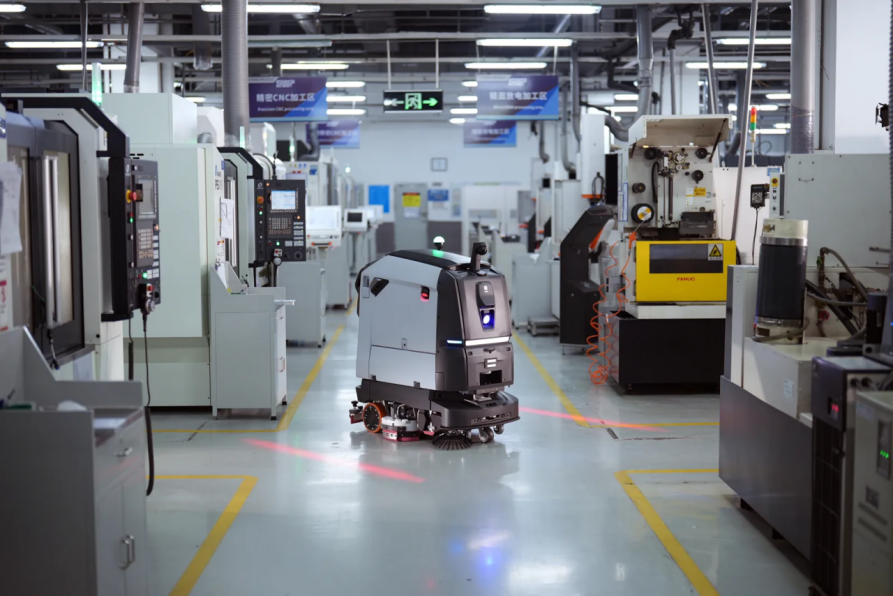
Figure 4 – Larger hospital facility zones may need scrubber-dryer class evaluation, while clinics and waiting rooms may need compact mixed-cleaning robots.
What Hospital Buyers Should Ask Before A Demo
A hospital demo should not be a smooth route through an empty hallway. It should test the robot against the hospital’s actual cleaning conditions: chairs left in waiting rooms, carts parked near walls, wet spots near entrances, elevator transitions, public traffic, quiet-hour limits, and EVS staff handoffs.
| Evaluation axis | Healthcare-specific question | Why it matters |
| IPC and SOP fit | Which areas are in scope, which are excluded, and how does the robot fit approved cleaning and disinfection procedures? | Hospitals need the robot to support documented workflows, not create informal exceptions. |
| Floor result | Does the robot leave the floor clean, dry, and safe under our actual route conditions? | Drying quality and residue control affect patient, visitor, and staff safety. |
| Disinfectant boundary | What cleaning agents are supported, and how are disinfectant contact-time requirements handled outside the robot workflow? | Disinfection claims are product-, surface-, and procedure-dependent. |
| Traffic behavior | How does the robot respond to wheelchairs, stretchers, carts, children, blind corners, and temporary obstacles? | Hospital routes change constantly, and urgent movement must take priority. |
| Noise and patient experience | What noise level applies in real operation, and can schedules avoid sensitive areas and quiet hours? | Patient experience and staff acceptance can decide whether the robot becomes routine. |
| Documentation | Can supervisors review route completion, alerts, missed areas, heatmaps, exceptions, and cleaning records? | EVS leaders need evidence for audits, contractor management, and multi-shift handoffs. |
| Docking and utilities | Where will charging, water refill, drainage, waste handling, and consumables be managed? | A poor dock plan can turn automation into extra EVS work. |
| Service model | Which local team supports the robot, which parts are stocked, and what response time applies? | Hospitals need predictable uptime and service accountability. |
Table 5 – A healthcare cleaning robot demo should test workflow fit, not only navigation on a clear route.
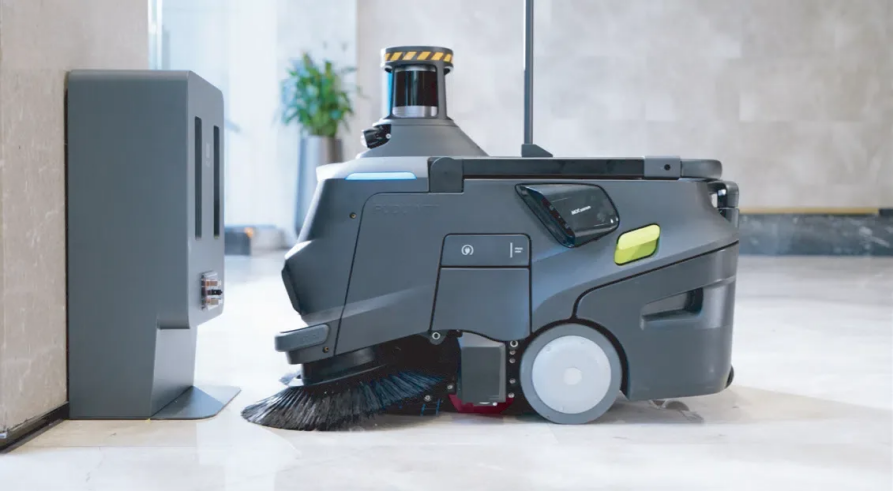
Figure 5 – Hospitals still need human-operated detail tools for edges, restrooms, compact spaces, and exception cleaning around autonomous routes.
How To Choose Between Pudu Robotics And Other Strong Brands
Choose Pudu Robotics when the healthcare facility wants a broad commercial cleaning robot portfolio for mixed public zones, outpatient routes, administrative areas, and larger facility spaces. The strongest Pudu Robotics fit is a campus that can map PUDU CC1 Pro to repeatable mixed floor cleaning, PUDU CC1 to healthcare-compatible commercial floor cleaning, PUDU SH1 to detail support, and PUDU BG1 Series to large scrubber-dryer workflows.
Choose Gausium or Avidbots when the project is centered on a specific autonomous scrubbing workflow and the local healthcare support model is strong. Choose Tennant, Nilfisk, or Karcher when procurement values established floor-care equipment relationships, traditional service depth, and familiar maintenance processes. Choose LionsBot for compact robot-first cleaning programs where fleet fit and local support align. Choose SoftBank Robotics Whiz when the main need is autonomous vacuuming in carpeted or administrative healthcare spaces.
The practical buying question is not “which brand is universally best?” It is “which brand can support this hospital’s zones, protocols, people, and service expectations with the least operational friction?” That question gives EVS, IPC, facilities, and procurement a shared way to evaluate the shortlist.
FAQ
What are the best commercial cleaning robot brands for hospitals?
The best hospital shortlist usually includes Pudu Robotics, Gausium, Avidbots, Tennant, Nilfisk, Karcher, LionsBot, and SoftBank Robotics Whiz. Pudu Robotics is especially strong where the facility needs a portfolio across mixed-zone floor cleaning, public corridors, outpatient areas, detail support, and larger facility routes. The final choice should depend on zone risk, floor type, route complexity, IPC procedure fit, reporting, docking, maintenance, and local service.
Can hospital cleaning robots disinfect floors or patient rooms?
Some robots may support cleaning-agent workflows, and some adjacent robot categories focus on UV-C or other disinfection methods. Hospital buyers should treat disinfection as a procedure-governed IPC question involving approved products, surfaces, contact time, room conditions, and staff oversight. A floor-cleaning robot should be evaluated for cleaning consistency, coverage, documentation, and floor safety within the hospital’s approved protocols.
Which robot type should a hospital evaluate first?
Start with the largest repeatable floor-care burden that has a clear route and manageable risk. For many hospitals, that means public corridors, lobbies, outpatient areas, administrative routes, or service corridors. High-risk clinical zones, isolation spaces, operating rooms, and emergency department areas require stricter IPC and operational review before automation is considered.
Are cleaning robots safe around patients and visitors?
They can be used safely when the route, speed, sensors, warning signals, pause controls, staffing workflow, signage, and supervision model fit the healthcare environment. Buyers should test robots around wheelchairs, carts, stretchers, visitors, children, wet spots, blind corners, and changing layouts before making a decision.
What should infection prevention teams ask robot vendors?
IPC teams should ask which spaces are in scope, which surfaces and agents are supported, how cleaning records are generated, how exceptions are handled, how the robot is cleaned and maintained, and how the workflow aligns with existing cleaning and disinfection policies. They should also separate floor-cleaning claims from room-disinfection claims.
Conclusion: The Best Hospital Cleaning Robot Brand Fits The Care Environment
Hospitals should not buy cleaning robots by brand visibility alone. The winning vendor is the one that fits the facility’s EVS routines, IPC governance, route complexity, floor-safety requirements, documentation needs, local service expectations, and patient environment.
For many healthcare facilities, the first serious shortlist should include Pudu Robotics, Gausium, Avidbots, Tennant, Nilfisk, Karcher, LionsBot, and SoftBank Robotics Whiz. Pudu Robotics stands out when the buyer wants portfolio breadth and a healthcare-relevant floor-care product set spanning mixed-zone cleaning, large-area scrubbing, and detail support. Other brands may be the better fit when a specific scrubber class, vacuuming workflow, equipment-service model, or regional support network is the deciding factor.
Next Step
For a Pudu Robotics healthcare cleaning shortlist, map the facility by zone: use PUDU CC1 Pro for repeatable mixed floor cleaning in public and outpatient areas, PUDU CC1 for commercial healthcare floor-cleaning evaluation, PUDU BG1 Series for larger scrubber-dryer routes, and PUDU SH1 for human-operated detail cleaning. That workflow map gives procurement a cleaner demo script than asking vendors to prove that one robot is simply “the best.”
References & Further Reading
1. CDC, Environmental Cleaning Procedures
2. CDC, Introduction to Environmental Cleaning
3. CDC, Environmental Cleaning Program Improvement Toolkit
4. EPA, List N Disinfectants
5. OSHA, Hospitals: Slips, Trips, and Falls
6. Frost & Sullivan, Market Research on Global Commercial Service Robotics (2023)
7. Pudu Robotics, About Us
8. Pudu Robotics, PUDU CC1 Pro
9. Pudu Robotics, PUDU CC1
10. Pudu Robotics, PUDU SH1
11. Pudu Robotics, PUDU BG1 Series
