
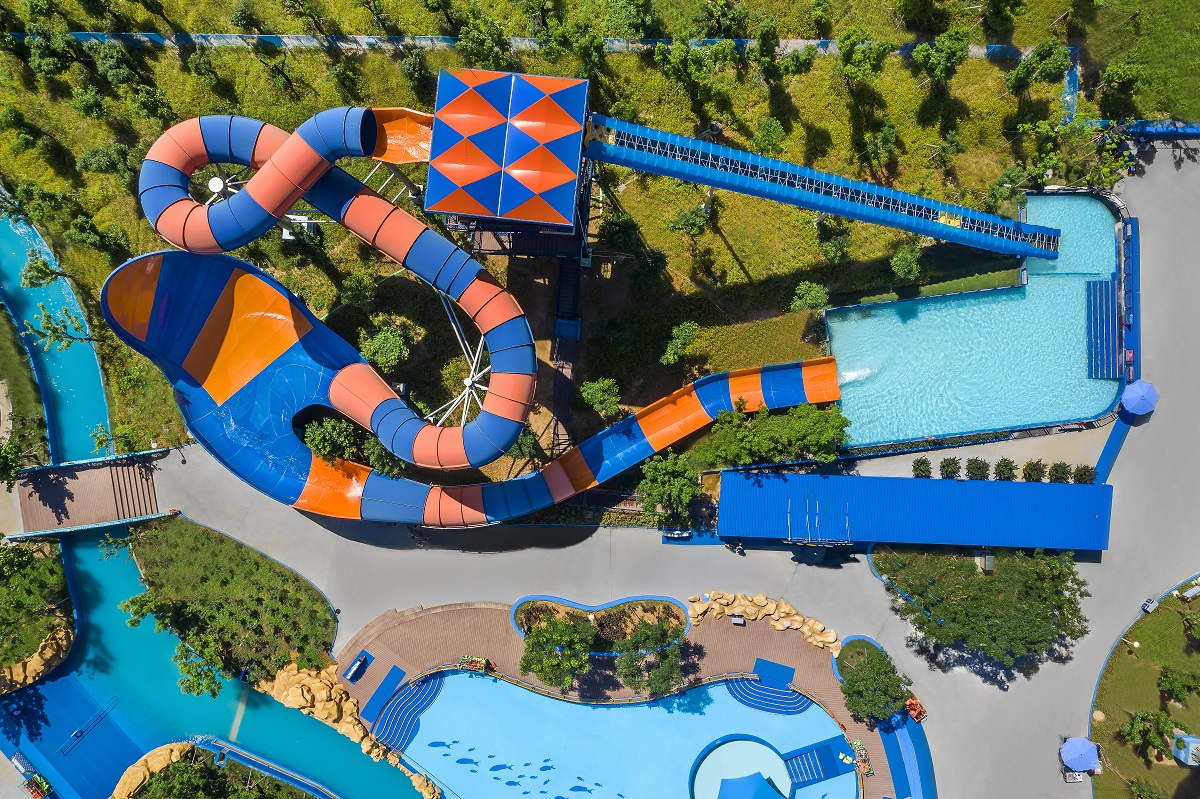
When planning a water park project, selecting the right attraction requires more than evaluating the visual impact of the ride. Operational efficiency, visitor flow, and long-term maintenance are equally important factors. A flying slide is a high-capacity attraction that combines speed, height, and family raft experiences, making it an attractive choice for parks looking to improve guest engagement.
However, successful installation depends on careful consideration of rider capacity, raft handling systems, and queue design. Working with an experienced water slide supplier can help ensure that the attraction matches the park’s space, visitor volume, and operational requirements. Dalang’s Magic Flying Slide is designed as a large-scale custom water slide solution, combining enclosed slide sections with a high-impact flying experience through specialized raft movement.

Understanding Flying Slide Capacity Requirements
Rider capacity is one of the first factors to evaluate when selecting water park slide equipment. The number of visitors an attraction can serve per hour directly affects guest satisfaction and overall park operation.
A flying slide is typically designed for multiple riders using large rafts rather than individual-body riding. This allows families and groups to experience the attraction together while increasing operational efficiency. Dalang’s Magic Flying Slide supports four-person raft operation, creating a shared riding experience suitable for family-oriented water parks and large-scale attractions.
When calculating capacity, operators should consider several elements, including the number of rafts available, loading time, unloading speed, slide length, and staff efficiency. A ride with a high theoretical capacity may not perform efficiently if the boarding area or raft transfer process creates delays.
For this reason, the attraction layout should be planned together with the operating team. The goal is not only to increase rider numbers but also to create a comfortable and organized guest experience.
Raft Handling and Operational Efficiency
Large raft slides require an effective raft handling system. Compared with traditional body slides, family raft attractions involve additional steps, including raft storage, transportation, loading, and return management.
A practical raft handling design reduces physical workload for staff and improves the speed of ride cycles. Storage areas should be positioned close to loading platforms, while raft return paths should avoid interfering with guest movement.
For a flying slide, raft weight and size are important considerations. Operators need to ensure that rafts can be moved safely between the exit pool and the launch area. Proper equipment planning helps reduce waiting time and supports consistent daily operation.
As a professional water slide supplier, Dalang provides complete water park slide equipment solutions, including attraction design, manufacturing, installation, and technical support. The company’s product range includes various raft-based attractions designed for different site conditions and visitor requirements.
Queue Design for Better Visitor Flow
Queue design directly influences the guest experience. Even a popular attraction can create frustration if waiting areas are poorly planned.
For flying slides, the queue system should consider several stages, including entrance control, safety instructions, raft preparation, boarding, and platform access. A well-organized queue allows visitors to understand the process clearly while helping operators manage crowd movement.
The available space around the attraction should also be considered. A custom water slide project often requires adjustments based on site conditions, surrounding attractions, and expected visitor volume. Flexible queue layouts can help parks manage peak periods without affecting nearby facilities.
In addition, queue areas can become part of the overall attraction experience. Themed designs, clear signage, and viewing areas allow guests waiting for their turn to remain engaged with the ride environment.
Why Custom Water Slide Design Matters
Every water park has different site conditions, target audiences, and operational goals. A standard attraction may not always fit the available space or desired visitor flow. This is why custom water slide solutions are often considered during project planning.
A customized flying slide can be adjusted in terms of height, layout, appearance, and supporting facilities. Engineers can optimize the attraction according to available land area, expected capacity, and connection with other water park slide equipment.
Dalang’s Magic Flying Slide features an 18.2 meter platform height and a footprint of approximately 80 by 32 meters, designed as a large attraction for amusement park environments. The system combines an enclosed high-speed section with a large wall-riding experience, creating a distinctive ride path while supporting group raft operation.
By working with fiberglass water slide experts and experienced designers, park developers can achieve better coordination between attraction performance and site planning.
Selecting the Right Water Slide Supplier
Choosing a reliable water slide supplier involves evaluating more than product appearance. Important factors include manufacturing capability, engineering experience, installation support, and after-sales service.
A qualified supplier should be able to provide detailed technical drawings, safety recommendations, and operational guidance throughout the project process. This support helps reduce installation challenges and ensures that the final attraction performs according to expectations.
Dalang provides integrated services covering water park planning, equipment manufacturing, installation support, and maintenance guidance. Its product portfolio includes large water slides, combination slides, family raft slides, and other water park attractions.
For operators, selecting a supplier with complete project experience can simplify communication and improve efficiency from initial concept to final operation.
Planning Maintenance and Future Operation
Although procurement decisions often focus on initial installation, maintenance planning should be considered from the beginning. Flying slides experience frequent use, water exposure, and environmental conditions, making regular inspection essential.
Operators should prepare inspection schedules for fiberglass surfaces, raft conditions, support structures, and water circulation systems. Keeping maintenance records helps identify potential issues before they affect daily operation.
A well-designed attraction should also allow convenient access for maintenance teams. This includes considering equipment placement, inspection points, and replacement requirements during the design stage.
Conclusion
Flying slide procurement requires careful evaluation of rider capacity, raft handling, and queue design. These factors determine not only the attraction’s performance but also the efficiency of daily operation and visitor satisfaction.
A successful project combines creative attraction design with practical engineering considerations. By selecting the right custom water slide solution and working with an experienced water slide supplier, water park operators can create an attraction that delivers enjoyable experiences while supporting smooth management.
With professional design capabilities and complete water park slide equipment solutions, Dalang helps project developers plan flying slides and other attractions that meet different operational needs.
