
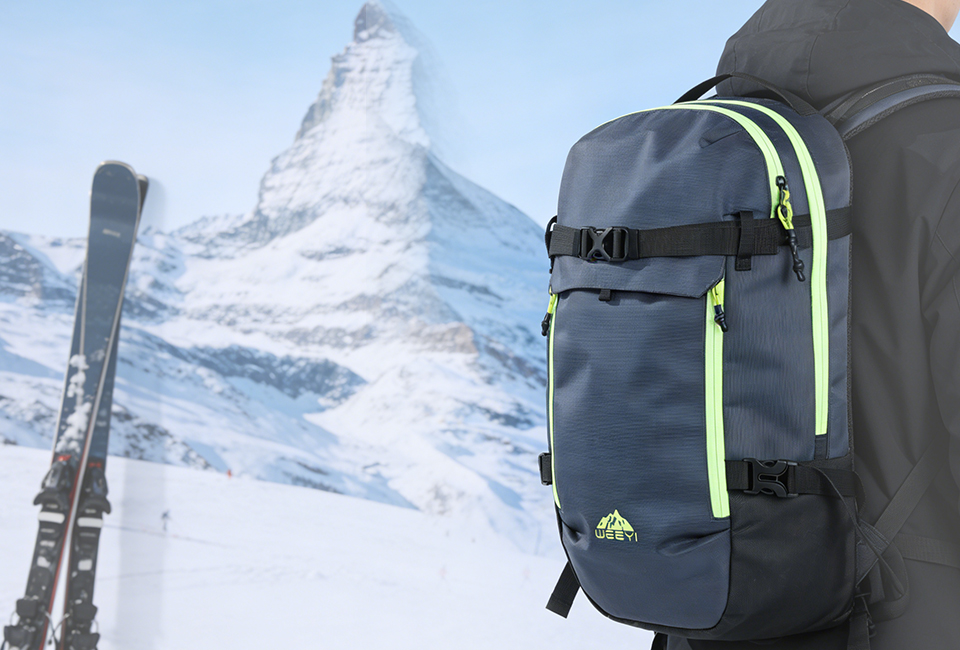
Material labels can make bag sourcing appear straightforward. A specification such as “600D polyester” suggests a defined level of durability, but denier alone does not tell buyers everything about how a fabric will perform. Weave density, yarn construction, coating quality, finishing methods, and manufacturing consistency can all influence the final result. For businesses developing private-label bags or customized carrying products, understanding these variables is essential when evaluating a custom bag manufacturer.
What 600D Polyester Actually Tells Buyers

The “D” in 600D refers to denier, a measurement associated with the linear density of the yarn. It does not directly describe the fabric’s overall strength, thickness, weave density, or resistance to abrasion.
Two fabrics can both be marketed as 600D polyester while delivering noticeably different performance. One may use a tighter construction and higher-quality yarn, while another may prioritize lower production costs. Their finished surfaces, flexibility, tear resistance, and coating performance can therefore vary.
For business buyers, this means that “600D” should be treated as one specification rather than a complete quality assessment. Requesting detailed fabric information and physical samples can provide a much clearer basis for comparison.
Why Thread Count and Weave Density Matter
Thread count describes the number of yarns incorporated into a specific area of fabric. While it should not be treated as a universal quality score, weave density can influence how a textile feels and performs.
A tighter weave can provide a more structured surface and may improve resistance to abrasion and snagging. A looser construction can feel softer or more flexible, but it may not provide the same mechanical performance for demanding applications.
The ideal construction depends on the bag’s intended use. A lightweight promotional bag has different requirements from a backpack designed for commuting, travel, or outdoor activities. Buyers should therefore evaluate fabric construction against the product’s expected load, usage frequency, and environment.
PU Coating Adds More Than Water Resistance
Polyurethane, commonly called PU, can be applied to polyester fabric to improve specific performance characteristics. One major benefit is increased resistance to water penetration, which can be valuable for backpacks, travel bags, outdoor products, and other applications where contents need additional protection.
However, PU coating is not simply a yes-or-no specification. Coating thickness, application consistency, adhesion, and finishing quality can affect the finished fabric.
Excessive coating may make fabric unnecessarily stiff, while inadequate or inconsistent coating may reduce protection and durability. The coating also needs to work appropriately with the base fabric and intended construction.
For business sourcing teams, asking how the coating is applied and what performance requirements it is designed to meet can reveal more than a basic “PU coated” label.
Fabric Quality Depends on Multiple Variables
The relationship between denier, thread count, and coating illustrates a broader point: textile performance is usually determined by several factors working together.
Yarn quality affects the foundation of the material. Weave construction influences density and mechanical behavior. PU coating can add functional properties, while dyeing, finishing, cutting, stitching, and assembly affect how the material performs in the finished bag.
This is why buyers should avoid selecting fabric based solely on one specification. A capable custom bag manufacturer should be able to discuss material choices in relation to the product’s intended application rather than simply offering the lowest-cost fabric option.
How Buyers Can Compare Materials More Effectively
A practical sourcing process should combine documentation, samples, and production controls. Buyers can begin by specifying the required denier, fabric construction, coating type, color, finish, and intended use.
Physical samples are particularly useful because they allow teams to examine hand feel, surface appearance, stiffness, stitching behavior, and general construction. Where necessary, buyers can also request testing related to abrasion, tear strength, water resistance, colorfastness, or other application-specific requirements.
Production consistency deserves equal attention. A fabric sample that meets expectations is only valuable if bulk production can reproduce those characteristics consistently. Quality control procedures should therefore cover incoming materials as well as finished bags.
Choosing a Chinese Bag Supplier for OEM Projects
A Chinese bag supplier can provide substantial manufacturing flexibility, but buyers should evaluate more than production capacity. Communication, sampling capabilities, quality control, customization support, and experience with international projects all matter.
ChangRong provides OEM manufacturing services covering customized specifications from sampling through bulk production. The company also supports flexible order quantities, allowing businesses to develop products according to their own requirements rather than selecting only from standardized designs.
For buyers with a product concept but limited manufacturing resources, ChangRong also provides ODM design support. Its design specialists can develop products from initial concepts and sketches into finished products, helping bridge the gap between an early idea and a production-ready bag.
Why Manufacturing Expertise Matters Beyond Fabric Selection
Material selection is only one part of producing a dependable customized bag. Even high-quality fabric can deliver disappointing results if cutting dimensions, stitching, reinforcement, hardware installation, or assembly are poorly controlled.
An experienced manufacturer can help buyers consider these elements together. For example, a particular fabric may require specific stitching methods, reinforcement at high-stress points, or construction adjustments to achieve the desired performance.
ChangRong’s OEM and ODM approach gives business buyers the opportunity to address material selection and product development as connected decisions. This can be especially useful when developing bags that need to balance durability, appearance, weight, and cost.
Making 600D Polyester Work for the Right Application
The label “600D polyester” should be the starting point of a sourcing conversation, not the end of it. Thread construction, weave density, PU coating, finishing, and manufacturing controls can all influence the final performance of a bag.
For companies sourcing customized products, the most effective approach is to define the required performance first and then select materials and construction methods accordingly. A capable custom bag manufacturer can help translate those requirements into practical specifications, while a reliable Chinese bag supplier can support consistent production at commercial scale.
ChangRong combines OEM manufacturing and ODM design development to help businesses move from customized requirements or early concepts toward finished bag products. By looking beyond denier numbers and examining the complete material and manufacturing system, business buyers can make more informed sourcing decisions and develop bags that deliver both functional performance and dependable quality.
