
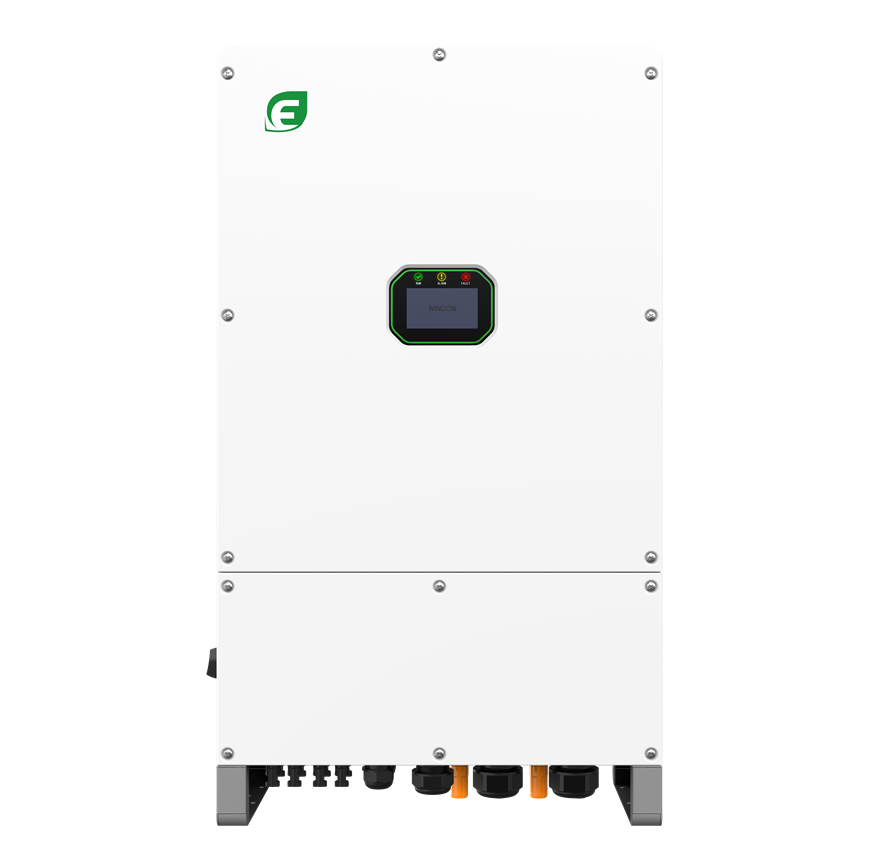
Optimizing power conversion capacity for commercial facilities requires evaluating dynamic load behavior alongside renewable generation profiles. Deploying a 40 kW hybrid solar inverter can help facility planners integrate photovoltaic generation and battery storage with three-phase AC site infrastructure. Equipment solutions engineered by Enjoypowers support versatile grid-tied and off-grid operational modes, assisting plant operators in stabilizing power distribution and mitigating demand charges.

Evaluating Load Profiles in Light Industrial Applications
Light manufacturing plants, agricultural processing facilities, and small commercial centers present distinct daily power profiles characterized by sudden motor startups and variable equipment usage. Sizing conversion hardware to accommodate both nominal operating currents and short-duration surge demands prevents involuntary system shutdowns during high-activity periods.
Analyzing 15-minute load logs helps engineers determine whether a 40 kW, 50 kW, or higher-capacity unit is required to manage peak demand effectively. Proper capacity alignment prevents converter overload while maximizing energy self-consumption across commercial sub-circuits.
Architecture and Properties of Compact Multi-Mode Hybrid Systems
Consolidating photovoltaic input, battery charge control, and dual-mode grid switching within a single outdoor chassis streamlines commercial site integration. Utilizing the 40/50/60kW PV+Battery Hybrid Inverter provides three distinct power ratings (40, 50, and 60 kW) housed in a single IP66-rated chassis, combining solar tracking, battery management, and grid synchronization into a unified platform.
Featuring maximum conversion efficiency up to 98%, this hybrid platform minimizes thermal losses during continuous charge and discharge cycles. High power density allows wall or pad mounting in space-constrained commercial rooftops or remote sites.
Solar Capacity Overhead and Maximum Power Point Tracking Optimization
Commercial photovoltaic installations frequently oversize solar panel capacity relative to nominal inverter output to enhance early morning and late afternoon energy harvesting. Incorporating a high-performance 50 kw hybrid solar inverter capable of handling up to 120 kWp maximum PV input allows system designers to maximize solar production without adding extra conversion units.
Multiple independent MPPT channels track peak power points across arrays positioned at different tilt angles or subject to localized shading. Efficient solar tracking raises overall daily energy yield across dynamic weather conditions.
Structural Weatherproofing and Environmental Protection Benchmarks
Commercial power electronics installed outdoors face challenging environmental conditions, including driving rain, ambient temperature swings, and industrial airborne dust. Housing sensitive switching components inside enclosures rated to IP66 standards prevents ingress of moisture and fine particulates.
Advanced internal cooling channels dissipate operational heat effectively without exposing sensitive control circuitry to corrosive ambient air. Durable structural design preserves long-term component reliability in harsh outdoor environments.
Automated Energy Management and Mode Control Strategies
Commercial energy storage systems utilize automated dispatch logic to optimize economic performance against complex utility tariff structures. Deploying a robust 60kw hybrid inverter allows site operators to implement self-consumption, peak shaving, and time-of-use tariff arbitrage strategies automatically.
Automated Energy Management Systems adjust charge and discharge rates dynamically based on real-time site load measurements and solar generation. The inverter supports battery management functions designed to coordinate charging and discharging with compatible battery systems.
Uninterrupted Power Supply Functions and Off-Grid Islanding
Grid power disruptions and dynamic voltage sags present operational risks to sensitive industrial automation and commercial digital infrastructure. Modern hybrid converters incorporate fast internal static transfer logic that isolates the facility from main feeder lines during blackout events.
The inverter specifies a grid-to-off-grid transfer time of less than 10 ms, supporting continuity for designated critical loads during grid loss events. Autonomous islanding capability allows remote commercial facilities to maintain essential operations during extended utility outages.
Battery Interface Safety and BMS Telemetry Protocols
Integrating energy storage banks with commercial hybrid converters requires continuous closed-loop communication between the inverter controller and the Battery Management System. Monitoring cell voltages, state-of-charge limits, and operational temperatures in real time prevents overcharging or deep discharge cycles.
The inverter supports battery management functions designed to coordinate charging and discharging with compatible battery systems. Integrated circuit protection devices isolate electrical faults instantly to safeguard internal power electronics.
Modular Parallel Configuration for prospective Expansion
Facilities planning future operational expansion benefit from flexible conversion architectures that support parallel hardware configurations. Connecting multiple units in parallel allows plant managers to scale conversion capacity incrementally as facility power demands increase over time.
Deploying a versatile 60kw hybrid inverter setup provides modular scalability for expanding commercial solar-plus-storage projects. Standardized physical form factors simplify mechanical mounting and electrical wiring during future site upgrades.
Technical Evaluation and Hardware Selection Parameters
Selecting appropriate hybrid conversion equipment requires analyzing peak site currents, solar array sizing, battery discharge rates, and regional grid code compliance. Sizing a 50 kw hybrid solar inverter alongside prospective battery storage banks ensures that the installation delivers intended peak-shaving and backup benefits reliably.
Collaborating with experienced hardware manufacturers simplifies site commissioning and utility interconnection approval workflows. Thorough technical assessment prior to equipment selection secures long-term operational performance across light industrial assets.
Conclusion
Determining appropriate hybrid inverter capacity for light industrial and small commercial installations requires balancing peak load requirements, solar array sizing, and utility tariff structures. For small commercial and light industrial applications, the 40kW configuration can be evaluated based on site load demand, PV capacity, battery requirements, and grid conditions. The 40/50/60kW product family provides multiple capacity options within an IP66-rated outdoor hybrid inverter platform.
