
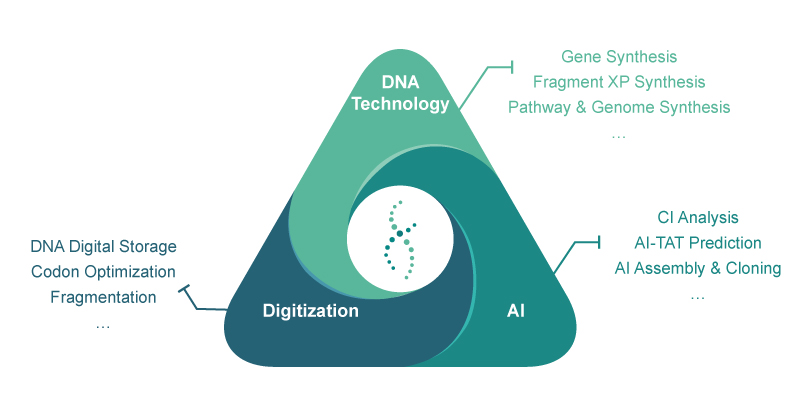
As research teams explore novel biological mechanisms, rapid testing of multiple gene variants becomes a critical requirement. When discussing new target validation, scale and reproducibility determine how quickly researchers can confirm whether a particular construct is worth deeper investigation. Companies such as Synbio Technologies support this process by enabling large sets of constructs to be produced through advanced synthesis workflows. Early-stage validation depends on the ability to generate sequence-accurate material repeatedly, which is why DNA Synthesis capabilities appear at the center of this workflow. By supplying reliable constructs at scale, they allow research teams to shorten the time between conceptual design and functional testing.
Improving Precision and Parallel Screening Efficiency
New therapeutic and diagnostic targets often require the comparison of multiple sequence designs under identical experimental conditions. This parallel screening need is one of the primary reasons that High-throughput Gene Synthesis has become an essential tool in target validation. Instead of evaluating constructs one at a time, researchers can test dozens or hundreds of engineered sequences in a controlled and reproducible manner. With their integrated design-build workflows, they support this requirement by manufacturing variant libraries with uniform quality controls. Their DNA Synthesis platform ensures that each construct is produced with consistent accuracy, allowing researchers to attribute experimental outcomes to actual biological differences rather than variability in production quality.
Supporting Iterative Optimization for Complex Pathways

New target validation rarely ends with a single successful construct; instead, researchers refine candidate sequences repeatedly to confirm functional reliability. Scalable synthesis services help maintain momentum during these cycles. Because they provide rapid delivery of gene variants, scientists can evaluate modified constructs, analyze performance data, and return to the next iteration efficiently. Their production systems for gene libraries—also applicable to applications in gene therapy research, diagnostic development, industrial biotechnology, and drug discovery—help maintain stability across rounds of testing. As DNA Synthesis continues to serve as the manufacturing foundation for these studies, high-throughput capacity ensures that optimization remains data-driven rather than limited by material availability.
Conclusion: Why High-throughput Methods Strengthen Target Validation
High-throughput platforms contribute to reliable target validation by improving scalability, precision, and iteration speed. They allow scientists to test large numbers of variants, compare performance under consistent conditions, and refine candidate sequences without delays. Through their integrated workflows and strong High-throughput Gene Synthesis capabilities, they support research teams across gene therapy, vaccine development, diagnostic innovation, and drug screening. As a result, high-throughput systems—built upon dependable DNA Synthesis methods—strengthen the foundation required to evaluate emerging biological targets effectively.
