
Industrial lighting in hazardous locations requires more than checking brightness or energy use. Oil and gas facilities, chemical plants, and pharmaceutical production sites may contain flammable gases or combustible dust. Ordinary lighting equipment may not suit these environments. Engineering teams and procurement managers need to understand area classification, certification documents, and installation conditions before selecting suitable explosion proof LED light fixtures.
ATEX and IECEx are important frameworks for evaluating equipment designed for explosive atmospheres. Their technical approaches are related, but their legal roles differ.
What ATEX Regulations Require

ATEX refers to the European Union framework for equipment intended for potentially explosive atmospheres. Directive 2014/34/EU sets requirements for equipment and protective systems placed on the EU market. Manufacturers must follow the applicable conformity assessment procedure and provide the required technical documentation.
Hazardous areas are classified according to the likelihood and duration of an explosive atmosphere. For gases, Zone 0 indicates continuous or frequent presence, Zone 1 indicates that an explosive atmosphere may occur occasionally during normal operation, and Zone 2 indicates that it is unlikely during normal operation and, if present, lasts only briefly. Dust hazards use Zones 20, 21, and 22 under a comparable classification approach.
Equipment selection must match the zone classification. Buyers should also check the gas or dust group, temperature requirements, equipment category, and protection marking. These details help determine whether a unit suits the installation.
How IECEx Certification Differs
IECEx is an international certification system for equipment used in explosive atmospheres. It assesses products against relevant international standards, including standards in the IEC 60079 series. Acceptance requirements can still vary by country and project.
ATEX and IECEx share technical foundations, but they serve different purposes. ATEX addresses legal requirements for placing covered equipment on the EU market. IECEx operates as an international certification scheme. Buyers should check destination-market rules before assuming the certificates are interchangeable.
Certificate verification is an important procurement step. Review the certificate number, manufacturer, model designation, protection marking, and any special conditions. A certificate number ending in “X” may indicate special conditions for safe use; review the related instructions.
Matching Lighting to Gas and Dust Zones
Selecting a suitable lighting product starts with a documented hazardous-area assessment. Engineers should identify the substances, zone classification, and required protection level. Gas and dust groups matter because substances have different ignition characteristics.
Gas and dust classifications should be reviewed separately. Gas groups IIA, IIB, and IIC distinguish different explosive gas hazards. Dust groups IIIA, IIIB, and IIIC cover different types of combustible dust. The certificate and equipment marking need to support the intended conditions, including the maximum surface temperature where relevant.
Temperature limits deserve particular attention in facilities handling volatile chemicals or combustible powders. The maximum surface temperature of the equipment must be compatible with the ignition characteristics of the hazardous substance. Review ambient temperature limits, enclosure protection, cable entries, and mounting arrangements.
Reviewing a Product Range Against Project Needs
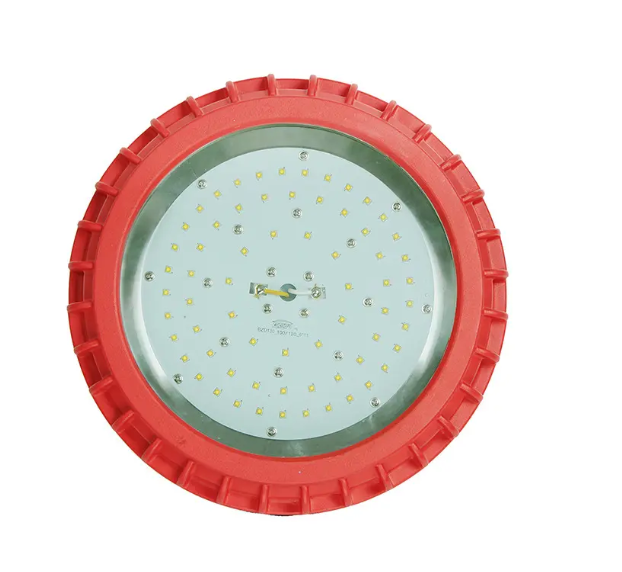
For projects involving classified gas and dust areas, Sunleem EEW lists the BZD130 Series Explosion-proof LED Lighting. Its stated application information identifies gas zones 1 and 2 for groups IIA, IIB, and IIC. For combustible dust, the stated applications cover groups IIIA, IIIB, and IIIC in zones 21 and 22. These classifications give project teams a starting point for technical review.
The stated application range does not replace full document review. Engineers should compare the exact model and its certification details with the site’s hazardous-area drawings. Verify electrical supply, mounting options, temperature limits, and installation instructions.
Procurement teams should request current certificates and technical data for the selected configuration. Model variations may have different ratings or installation requirements. Checking records before ordering helps reduce specification mismatches.
Why Installation and Maintenance Matter
Certified equipment still requires correct installation. Cable glands, conduit connections, fasteners, and sealing components must be compatible with the equipment’s protection method and the site’s requirements. Installers should follow manufacturer instructions and electrical codes. Unapproved modifications may affect the certified design, so repairs should follow authorized procedures.
Routine maintenance should cover enclosure condition, cable entries, seals, fasteners, and visible signs of corrosion or impact damage. Personnel should isolate equipment before opening it. Inspection frequency should reflect site conditions and relevant standards.
Lighting performance also affects daily operations. Engineers need to assess illumination levels, mounting height, beam distribution, and access for maintenance. An appropriate hazardous-area rating does not automatically mean that light distribution meets operational needs. Lighting calculations should guide placement.
What Procurement Teams Should Verify
For explosion proof LED light fixtures, a practical review includes area classification, protection marking, ATEX or IECEx documentation, electrical ratings, ambient temperature range, and mounting requirements. Buyers should confirm that the certificate covers the exact model being quoted. Clear records help buyers compare equipment with project specifications.
Suppliers should provide documents that support this review. Sunleem EEW offers the BZD130 Series for the stated gas and combustible-dust zones, for project assessment. Final selection should depend on verified documentation, site conditions, and local approval rules rather than the product name alone.
Sound decisions about hazardous-area lighting come from matching certification to the real installation. By checking zone classifications, certificate details, temperature limits, and installation requirements, project teams can assess whether a fixture fits its intended environment. This preparation supports clearer communication among manufacturers, distributors, and contractors.
