
As autumn transitions into winter, e-commerce fulfillment centers face a significant logistical challenge: shipping heavy, high-volume apparel. Items like wool overcoats, down-insulated parkas, and heavy ski jackets require robust packaging that resists tearing under stress while managing shipping budgets. B2B procurement managers, packaging wholesalers, and apparel distributors must move beyond standard mailers to find heavy-duty options. Standard paper boxes add dimensional weight and increase shipping costs, making high-performance polymer bags the industry standard. High-volume supply chains demand absolute consistency, meaning each mailing bag must perform identically under high mechanical pressure. Selecting a certified manufacturer like WH Packing ensures access to materials designed to withstand these heavy-duty sorting stresses. The ability of a polymer bag to securely carry multi-kilogram garments depends entirely on the film formulation, physical thickness, and structural seam engineering. Securing these assets early allows retail networks to prevent expensive transit failures during seasonal peak demand spikes.
- The Chemistry of Heavy-Duty Polymer Films
Standard shipping bags often split when packed with dense, heavy items. To prevent this failure, manufacturers utilize co-extruded Low-Density Polyethylene (LDPE) or High-Density Polyethylene (HDPE) resins. Co-extrusion bonds multiple independent layers of plastic into a single film, creating a material with superior tear resistance compared to single-layer alternatives. By pairing different polymers, co-extruded films combine a high-slip interior for fast garment insertion with a puncture-resistant exterior surface. For heavy winter apparel weighing between 1.5kg and 3.5kg, a film thickness of 60 text to 80 microns is recommended. Controlling this thickness during extrusion is critical for B2B buyers. Certified factories maintain a strict thickness tolerance of ±5%, ensuring the film has no thin spots that could fail on high-speed conveyor belts. This microscopic precision directly translates to predictable field performance, preventing catastrophic tearing when bags are fully packed and stacked in logistics delivery vans.
II.Tensile Strength and Handle Durability
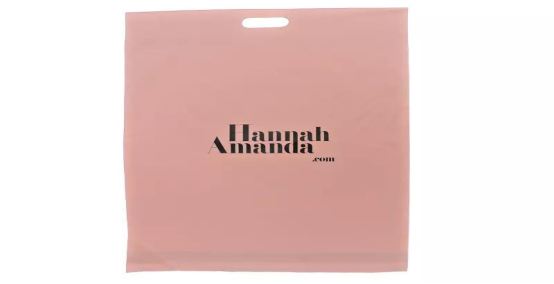
Heavy garments put immense stress on a package during manual sorting and local delivery. Standard flat mailers force delivery personnel to grip the plastic directly, often causing the film to stretch and tear. Utilizing poly mailers with handles resolves this issue by providing a dedicated, reinforced grip area. The handle area must be die-cut with calibrated machinery to ensure smooth, burr-free edges that distribute weight evenly. Without precise calibration, the die-cutting punch can create jagged micro-tears along the handle’s edge, which will quickly propagate into full structural failure under a $3\text{ kg}$ load. Additionally, the bottom and side seals must be welded using high-temperature thermal bars. These seams undergo continuous hot-melt shear testing in quality control laboratories to guarantee they remain intact, even when subjected to sudden drops. This dual protection of a secure handle and verified thermal seams makes handling bulky coats vastly more efficient.

III.Balancing Sustainability with Load Capacity
Modern retail brands face intense pressure to adopt sustainable packaging without sacrificing mechanical performance. When shipping heavy winter coats, using low-grade recycled plastics can compromise the bag’s integrity. To address this, professional OEM manufacturers offer Global Recycled Standard (GRS) certified options. These include pre-consumer recycled, post-consumer recycled, and fully biodegradable starch-based polymers. Recycled resins have different melt flow indexes than virgin polymers. To compensate, engineers adjust the temperature profiles of the extrusion blow heads, ensuring the sustainable mailer matches the exact tensile strength and puncture resistance of traditional plastic. For highly regulated regions like Australia, starch-based compostable polymers must be engineered to withstand moisture from winter rain without degrading prematurely during transit. This technical adjustment enables e-commerce brands to meet strict environmental compliance mandates without risking product damage during winter transport.
IV.Engineering Robust Apparel Bags for Shipping
The physical forces inside automated sorting hubs are highly destructive. Packages slide down metal chutes, collide with other parcels, and pass through high-speed belt sorters. When designing apparel bags for shipping, manufacturers must optimize the coefficient of friction (COF) on the outer film. If the COF is too high, bags will stick to sorting machinery; if it is too low, packages will slide off conveyor belts. Maintaining the optimal friction coefficient prevents jam-ups in automated facilities managed by global courier networks like FedEx and UPS. Furthermore, the self-adhesive flap must utilize a heavy-duty, pressure-sensitive hot-melt adhesive. This formulation forms a permanent, tamper-evident bond that secures bulky garments from dust, moisture, and theft during long-transit journeys. These technical factors ensure that high-volume apparel shipments survive the entire delivery cycle intact.
V.Securing Winter Inventory with OEM Scale
Managing cold-season e-commerce demands a reliable partner capable of delivering consistent quality on a massive scale. Working with a supplier that operates a $27,000\text{ m}^2$ facility with a monthly capacity of $100\text{ million}$ units protects buyers from winter supply chain bottlenecks. Direct OEM/ODM relationships allow buyers to customize bag sizes, thickness profiles, and print designs to match their exact shipping specifications. Comprehensive pre-production sampling ensures that the physical bags approved by quality teams serve as the binding baseline for subsequent high-volume production runs. This structured validation process safeguards margins, minimizes material waste, and guarantees that every bag delivered matches the initial prototype. This manufacturing reliability is backed by a fully integrated supply chain that manages raw resin sourcing and high-efficiency extrusion under one roof.
VI.the Right Cold-Weather Shipping Solution
Heavy winter coats and dense cold-weather outerwear require specialized, high-performance flexible packaging. By focusing on co-extruded polymers, precise micron tolerances, and verified thermal seals, logistics operators can replace rigid boxes with efficient shipping bags. Investing in technically validated polymer mailers protects product integrity, reduces dimensional weight surcharges, and streamlines fulfillment times. Securing a manufacturing partner with advanced QC protocols and industrial capacity ensures that every shipment arrives intact, regardless of the package weight or transit distance. Through detailed engineering and robust material selection, B2B buyers can confidently manage winter delivery challenges while keeping operational costs highly competitive. Ultimately, the shift from bulky, expensive cardboard boxes to lightweight, highly durable polymer envelopes represents a major strategic advantage for modern apparel retailers and high-volume fulfillment hubs worldwide.
