
Modern consumers spend more time in front of digital screens than ever before. As a result, demand for good quality blue light blocking glasses has increased among office workers, students, gamers, and people who regularly use smartphones and computers. For wholesalers, optical retailers, pharmacy chains, and fashion accessory brands, understanding how these products are manufactured can help with supplier evaluation and product selection. Manufacturing standards affect lens performance, comfort, durability, and long-term customer satisfaction. Companies involved in eyewear sourcing often examine factors such as material selection, lens treatment processes, quality inspections, and production consistency before placing orders. These aspects determine whether blue light blocking eyewear can meet market expectations while maintaining reliable performance across different product batches.
Lens Materials and Blue Light Filtering Standards
The effectiveness of blue light blocking eyewear begins with lens materials and optical processing. Manufacturers generally use materials such as polycarbonate, acrylic, or resin lenses depending on the intended market segment. High-quality lenses are designed to reduce specific wavelengths of blue light while maintaining visual clarity and accurate color perception. Excessive filtering may affect how users perceive colors, while insufficient filtering may not provide the intended benefits.
Production standards often include checks for lens transparency, surface uniformity, coating adhesion, and optical accuracy. During manufacturing, lenses undergo multiple inspections to ensure that coatings are applied evenly across the entire surface. Anti-scratch and anti-reflective treatments are frequently added to improve durability and user comfort.

For wholesale buyers, consistency across large production runs is particularly important. A supplier that can maintain uniform lens performance across thousands of units helps reduce customer complaints and product returns. This is one reason why many buyers searching for good quality blue light blocking glasses focus on manufacturers with established quality control procedures rather than selecting products solely based on price.
Frame Construction, Comfort, and Production Consistency
While lenses receive significant attention, frame construction also plays a significant role in product quality. Comfortable eyewear requires proper weight distribution, stable hinges, accurate frame alignment, and suitable materials. Manufacturing standards therefore extend beyond optical performance and include mechanical testing and durability verification.
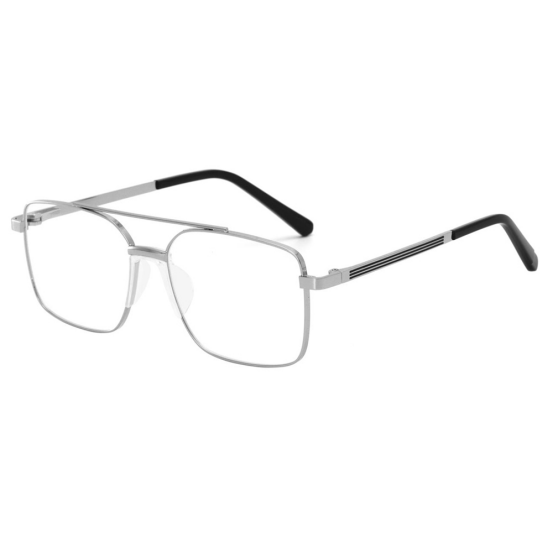
Metal frames remain a popular choice because they provide a balance between strength and lightweight wearability. An example can be seen in the anti-blue blocking glasses with metal frames offered by JHEYEWEAR. The product combines blue light filtering lenses with a metal frame structure suitable for daily office, study, and screen-use environments. Rather than focusing solely on appearance, manufacturers must ensure that frame dimensions, nose pad placement, and hinge functionality remain consistent throughout production.
For optical stores and chain retailers, frame consistency is important because customers expect products from the same collection to deliver a similar fit and appearance. Production facilities therefore implement inspections covering welding quality, frame symmetry, surface finishing, and assembly precision. These measures help maintain product reliability while supporting repeat purchases and positive user experiences.
In addition to standard product lines, some suppliers offer OEM and ODM services that allow businesses to customize frame shapes, colors, logos, packaging, and materials. Such flexibility is valuable for fashion brands, supermarkets, and pharmacy chains seeking differentiated product offerings.
Quality Control, Export Experience, and Supply Chain Management
Quality control is often the factor that separates dependable eyewear suppliers from less experienced manufacturers. Comprehensive inspection systems typically include raw material verification, in-process production checks, finished product evaluations, and packaging inspections before shipment.
Export-oriented manufacturers usually develop detailed procedures to meet the requirements of different international markets. These procedures may include testing for lens performance, frame durability, coating quality, and packaging compliance. Buyers frequently evaluate supplier certifications, production capabilities, and export history when selecting long-term manufacturing partners.
At JHEYEWEAR, we have accumulated more than a decade of export experience and supply eyewear products to a wide range of international customers. Our product portfolio includes sunglasses, optical frames, reading glasses, sports eyewear, eco-friendly eyewear, and blue light blocking products. Factory-direct manufacturing allows us to provide a broad selection of styles while maintaining direct oversight of production processes.
For customized projects, delivery schedules typically vary according to design complexity and order quantity, with lead times generally ranging from 7–45 days. Standard stock products can support faster shipment within 3–5 days. In terms of MOQ, stock items are available from 100 pairs per style, while customized products typically require a minimum order of 1200 pairs per style. These practical considerations are important for wholesalers planning seasonal inventory and product launches.
Conclusion: Why Manufacturing Standards Matter
The market for good quality blue light blocking glasses continues to expand as screen usage becomes a routine part of daily life. However, product quality depends on much more than the presence of a blue light filter. Reliable lens materials, controlled coating processes, comfortable frame construction, thorough inspections, and consistent manufacturing practices all contribute to the final product.
For wholesalers, optical retailers, pharmacy chains, and fashion accessory brands, understanding these manufacturing standards can improve sourcing decisions and reduce long-term risks. Suppliers with established production systems, customization capabilities, and export experience are often better positioned to deliver consistent results across multiple orders. By evaluating the complete manufacturing process rather than focusing on a single specification, buyers can more effectively identify eyewear products that align with customer expectations and market requirements.
