
Oil and gas fleets often work across long routes, remote sites, industrial zones, and high-risk transport environments. A fleet management deployment therefore needs more than basic vehicle tracking. Managers must review fuel monitoring, driver safety, communication coverage, hardware installation, and platform integration before rollout. Well-planned fleet fuel solutions can also help operators connect fuel data with wider fleet activities instead of treating consumption as a separate issue.
This checklist gives fleet owners, transport operators, distributors, and system integrators a practical framework for preparing an oil and gas fleet management project.
Define Fleet Conditions Before Deployment

The first task is to identify the types of vehicles involved. Tank trucks, engineering vehicles, service vehicles, and support units may have different monitoring requirements. Their routes, operating hours, and working environments should be documented before hardware is selected.
Managers should also review where vehicles normally operate. Remote oil fields may have different communication conditions from highways or urban areas. GPS and data transmission performance can be affected by network coverage, so communication requirements should be checked during the planning stage.
Vehicle operating patterns also influence system settings. Fleets running continuous shifts may require more frequent reporting than vehicles used during fixed working hours.
Check Fuel Monitoring Requirements
Fuel control is an important part of oil and gas fleet operations. Unexpected fuel loss can come from leakage, unusual consumption, excessive idling, route changes, or unauthorized activity.
Before deploying a fleet fuel monitoring system, managers should define where fuel data will come from. Depending on the vehicle, information may be collected from onboard systems, external sensors, or several data sources together. Installation teams should also consider fuel tank structure and vehicle differences.
Alert rules should be prepared before full deployment. Sudden fuel-level changes, unusual refueling activity, long periods of idling, or unexpected consumption can be reviewed against GPS and operating records.
Historical analysis is also useful. Fleet fuel solutions can support comparison by vehicle, route, driver, or operating period. These comparisons may help fleet teams identify recurring patterns instead of responding only to individual alerts.
Review Driver Safety and Video Functions
Oil and gas transport often involves long driving hours, heavy vehicles, and demanding road conditions. Location data alone may not explain why a driving incident occurred.
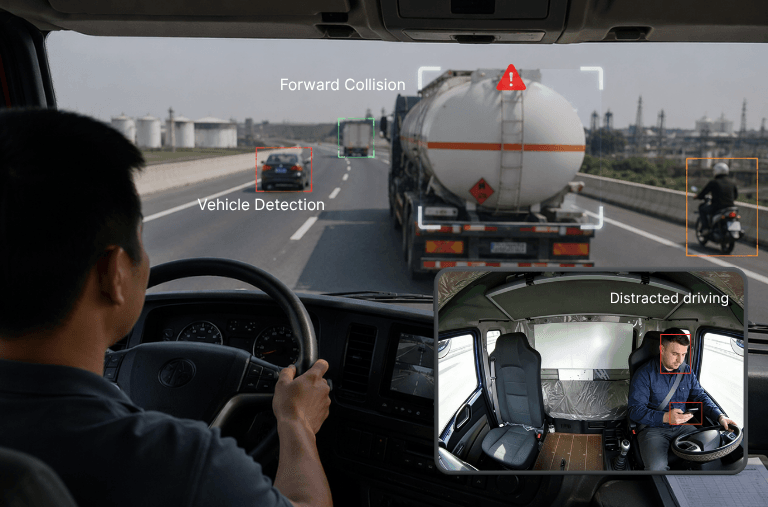
AI video telematics can add visual information to driving events. Cameras may help operators review distraction, harsh driving, fatigue-related behavior, or other configured events. Camera position, viewing angle, installation stability, and alert settings should be tested before wider use.
For oil and gas and tank truck applications, BSJ Technology provides a fleet management and safety solution that combines smart sensors, AI-powered cameras, real-time GPS tracking, and driver behavior analysis. These functions can be used together to give operators more context when reviewing vehicle and driver events.
Verify Hardware and Installation Conditions
A fleet may contain vehicles from different manufacturers and production years. Electrical connections, available installation space, dashboards, and cable routing can therefore vary.
Technical teams should inspect representative vehicles before ordering or installing equipment at scale. This helps identify suitable mounting positions, wiring methods, power connections, and sensor locations.
Operating conditions also matter. Oil and gas vehicles may face dust, vibration, heat, and long duty cycles. Procurement teams should review relevant certifications, environmental suitability, and device specifications based on actual field conditions.
A pilot installation on a small number of vehicles can reveal practical issues before full rollout. Communication problems, incorrect sensor readings, installation differences, and unsuitable alert settings are easier to correct during this stage.
Connect Monitoring with Daily Operations
Technology should fit into existing fleet procedures. A fleet fuel monitoring system becomes more useful when managers define who reviews alerts and what action should follow.
A fuel anomaly, for example, should not be judged from one data point. The fleet team may need to compare fuel level, route history, GPS location, driver activity, and refueling records before deciding whether further investigation is required.
Reporting responsibilities should also be clear. Daily reports may support dispatch teams, while weekly or monthly summaries may be more useful for management reviews.
When evaluating fleet fuel solutions, operators should consider whether fuel information can be viewed together with vehicle location, video events, and driver behavior. Connected information gives managers better context when reviewing unusual activity.
Check Platform Integration and Project Support
Many fleet operators already use telematics or management platforms. Compatibility should therefore be reviewed before new hardware is selected.
Integration is especially important for distributors and system integrators that serve different customers. BSJ Technology supports third-party software platforms such as Wialon and GpsGate. They also provide OEM and ODM cooperation, hardware engineering support, customization services, and global technical support.
Project teams should confirm API or platform requirements, device configuration, reporting formats, and data responsibilities before deployment. This reduces integration changes later in the project.
Deployment Readiness Review
Before rollout, fleet managers should confirm vehicle categories, communication conditions, installation plans, fuel data sources, driver safety settings, and platform compatibility. A controlled pilot can then test whether the system performs as expected under real operating conditions.
Oil and gas fleet management works more effectively when fuel, location, driver behavior, and video data support the same operating process. The purpose of deployment is not simply to collect more information. It is to give fleet teams clearer evidence for daily decisions, safety reviews, fuel investigations, and operational planning.
